INSTALLATION FOUNDATIONS • GROUNDWORK GUIDE
To prepare ground for artificial grass, establish the finished levels, remove unsuitable material, resolve drainage, install the required edging and build a firmly compacted base with an even laying course. The aim is a stable foundation—not simply a flat-looking patch of soil.
This guide covers preparation up to the point where the base is ready for turf. For cutting, joining, fixing and infill, follow our complete artificial grass installation guide.
Why the Ground Beneath the Grass Matters
Artificial grass follows the surface underneath it. Hollows, soft spots and poorly formed levels can show through the finished lawn. Filling a dip with loose material just before fitting may make it look better briefly without providing lasting support.
Good preparation brings three things together: a base that stays stable, a route for water and finished levels that meet the surrounding garden neatly. Turf quality matters, but it cannot compensate for problems in those foundations.
How to Prepare the Ground: The Key Steps
1. Survey the Area and Set Finished Levels
Measure the lawn and note patios, paths, beds, steps, thresholds and other fixed points. Decide how the lawn should meet them before choosing the dig depth. Keep drainage features and building details clear; do not raise ground over a damp-proof course or cover air bricks.
- Check for buried services before excavation or driving stakes.
- Look for soft ground, roots, rubble and areas that hold water.
- Plan delivery and waste routes, especially through narrow access.
- Allow for the turf thickness as well as the layers beneath it.
2. Remove Turf and Unsuitable Material
Excavate to the level required for the agreed build-up. Remove vegetation and loose or unsuitable material rather than burying it beneath the new surface. Assess soft spots before continuing.
Depth is a design decision, not a fixed rule. A garden needing drainage or ground remediation may require a different approach from stable, well-drained ground. For the budget implications, see our soil-installation cost guide.
3. Position Any Specified Geotextile
Where specified, a suitable permeable geotextile separates materials and helps limit their mixing. Follow the proposed build-up and the membrane manufacturer’s overlap and fixing instructions.
Do not use impermeable plastic as a substitute. A membrane is not a guarantee that weeds can never appear: wind-blown seeds can establish in debris above it. Pet-use areas also need the membrane position and drainage considered as part of the whole system.
4. Install Secure Edging
Edging contains the base and provides a clean boundary for the finished lawn. Suitable options depend on the design and fixing method; treated timber and appropriate hard edges are possible choices, not interchangeable instructions.
Form curves and transitions carefully. Plan how the turf will be secured to that particular edge instead of assuming the same nails, adhesive or spacing work on every material. Our artificial grass edging guide covers the finishing choices.
5. Build the Specified Aggregate Base
Use an aggregate specification suited to the ground, intended use and drainage design. MOT Type 1 is used for stable bases in suitable installations, but its name alone does not make a build-up freely draining or suitable for every site.
Agree the material and compacted thickness before ordering. Do not substitute a convenient pile of mixed rubble or assume that adding more stone will cure waterlogged ground.
6. Compact in Appropriate Layers
Build up and compact the aggregate in layers suited to the material and compaction equipment. Follow equipment instructions and use the required protective equipment. Check the base as you go rather than relying on one pass over a deep, loose layer.
The finished base should be firm and follow the intended levels and falls. Stop and investigate movement, pumping or soft patches instead of concealing them under the laying course.
7. Form a Smooth, Firm Laying Course
Use the specified finishing material to create an even surface, then compact and finish it as required for the system. Granolithic material, sand or other aggregates are not automatic like-for-like substitutes; selection depends on the installation.
Check for hollows, ridges and poorly supported edges. “Level” should mean even and correctly graded—not necessarily perfectly horizontal where the design requires a fall.
8. Check the Base Before Fitting
- Does the surface remain firm underfoot, without obvious soft spots?
- Are levels consistent with the agreed build-up and surrounding surfaces?
- Are edging and transitions secure and tidy?
- Are drainage routes and outlets clear, where provided?
- Is the surface clean and suitable for the chosen turf system?
This is the handover point to fitting. Rolling out grass should not be the method used to hide an unfinished base.
What Should the Base Build-Up Look Like?
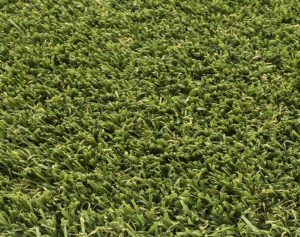
The visible surface; product thickness affects the finished level.
A smooth, firm finish—not a substitute for a sound base.
Material and depth selected for the ground, drainage and intended use.
Its position and suitability belong in the installation design.
Unsuitable material and soft spots addressed before building upwards.
Illustrative layer order only. Not to scale and not a specification for every site. Drainage, edging and any safety underlay need their own design.
Use the diagram to understand the purpose of each layer, not to order materials from it. Our guide to what goes under artificial grass explains the material choices in more detail.
How Do You Prepare the Ground for Drainage?
Start with the existing problem. Water collecting after rain may relate to slow-draining soil, local hollows, incoming runoff or a restricted outlet. The appropriate response depends on which of those is happening.
Water must be able to pass through the chosen system and reach a suitable destination. Do not direct it towards the house or a neighbour’s property. Persistent waterlogging should be assessed before the new base is built.
See what to put under artificial grass for drainage for a closer look at the drainage side of the specification.
Common Ground-Preparation Mistakes
| Mistake | Better Approach |
|---|---|
| Choosing the excavation depth first | Set finished levels and design the build-up, then calculate excavation. |
| Covering a soft spot | Investigate and address unsuitable ground before continuing. |
| Treating a membrane as a drainage fix | Specify separation and drainage for their different purposes. |
| Using the laying course to fill deep hollows | Correct and compact the underlying base. |
| Ignoring edges and transitions | Plan perimeter support and adjacent levels early. |
| Ordering grass before checking the layout | Account for roll widths, pile direction and joins with the fitting plan. |
Can You Prepare the Ground Yourself?
Yes, on a suitable site and with the right equipment and physical capacity. The work includes moving and disposing of substantial material, not just raking the surface. Complex drainage, uncertain ground or difficult levels are good reasons to involve an installer.
If you want AGAG to fit turf onto a base you prepare, agree the arrangement and specification first. Acceptance of an existing or DIY-prepared base is subject to assessment.
What Tools Might You Need?
Depending on the job: measuring and levelling equipment, a spade or turf cutter, shovel, wheelbarrow, rake, suitable compaction equipment, edging tools and the protective equipment required for each task. Arrange material delivery and lawful waste disposal before starting.
Ground-Preparation FAQs
How deep should I dig for artificial grass?
Use the depth required for the specified base and turf at the correct finished level. Soil condition, drainage and surrounding levels mean one depth is not suitable for every garden.
Can I lay artificial grass straight onto soil?
Not as a permanent garden installation we would recommend. Prepared ground and a suitable stable base are needed to support the finished lawn.
Do I always need MOT Type 1?
No single aggregate suits every site. Type 1 can be appropriate in a specified stable base, but the material must work with the ground conditions and drainage design.
Should the surface be perfectly flat?
It should be smooth and correctly graded. Planned falls or gentle contours may be appropriate, while accidental hollows and unstable patches are not.
Will a weed membrane stop every weed?
No. A suitable membrane can help as part of the build-up, but seeds can establish in debris on the surface. Routine debris removal still matters.
What happens after the base is ready?
The turf is laid out, cut, joined and secured, with any specified infill and brushing. Follow the chosen product’s instructions and the fitting plan.
Get the Groundwork Right Before You Order the Grass
Send our team photographs of the garden, access and any drainage concerns. We can discuss the preparation and fitting approach for your site.
Updated 10 September 2026.