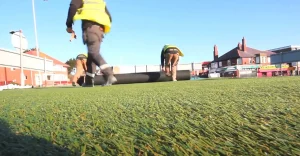
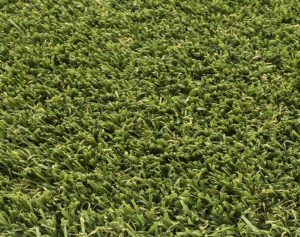
Yes — artificial grass can be laid on concrete, patios, paving slabs, and other solid surfaces, as long as the base is stable, drains properly, and is prepared the right way.
For many gardens, yards, play areas, and side returns, it can be a smart way to cover tired concrete without digging everything out and starting again.
The important bit is not just getting the grass down. It is making sure the surface underneath is sound, the joins stay neat, the edges stay secure, and water has somewhere to go. That is where a lot of DIY installs go wrong.
In this guide, we’ll show you how to lay artificial grass on concrete step by step, when you need foam underlay, how to deal with paving slabs and uneven areas, and when it makes more sense to get it professionally fitted.
Quick answer: Yes, you can lay artificial grass on concrete, patio slabs, or other hard surfaces. The base needs to be clean, stable, and free-draining. In most cases, adding a foam underlay improves comfort and helps smooth out minor imperfections. The grass is then cut to fit, joined if needed, and secured with the right outdoor adhesive.
Why Lay Artificial Grass on Concrete?
Concrete is practical but rarely pretty. Over time it becomes dull, cracked, and slippery in wet weather. Artificial grass instantly brightens up tired patios and yards, making them safer and far more inviting.
- Instant facelift – cover up unattractive concrete with a lush green finish.
- Non-slip and safer – no moss, no ice-rink effect in winter.
- Quick install – no heavy groundworks needed compared to soil.
- Child and pet friendly – add a foam underlay for extra comfort.
- Long-lasting – a well-installed lawn can last 10+ years with minimal upkeep.
Thinking of a full home makeover? Explore our residential artificial grass options.
Is Concrete, Patio or Paving Suitable?
In many cases, yes. Artificial grass can be laid over concrete, patios, and paving slabs without ripping everything out first, but the surface underneath still needs to be checked properly.
- Stable and mostly flat? Great — that is usually a solid starting point.
- Minor cracks or shallow dips? These can often be sorted with a filler or levelling compound.
- Loose slabs or badly damaged concrete? Fix these first, otherwise the finished lawn may not sit properly.
- Standing water? Deal with drainage before installation. If water pools on the base now, it will still be an issue once the grass is down.
Older patios and paving areas can work well, but they often need a bit more prep to stop joints, ridges, or uneven edges showing through the finished surface.
Do You Need Underlay on Concrete?
In most cases, yes — we would recommend using a foam underlay when laying artificial grass on concrete.
Concrete is solid, unforgiving, and rarely perfectly smooth. A good underlay helps soften the feel underfoot, improves comfort for children and pets, and takes the edge off small bumps, joins, or shallow imperfections in the base.
- Use underlay if you want a softer finish, better comfort, or the concrete has minor imperfections.
- You may not need it if the area is purely decorative and the surface is already very smooth and well-drained.
- Choose a free-draining underlay rather than anything that traps water.
It is especially worth considering for gardens, play spaces, dog runs, and anywhere people will actually use the surface rather than just look at it.
For safety play areas, check out our artificial grass for schools and nurseries.
Tools & Materials You’ll Need
Before you get stuck in, gather the essentials. Having the right kit makes all the difference.
- Stiff broom and hose / jet wash
- Artificial grass rolls (allow extra for cuts)
- Foam underlay (5–10 mm for comfort & safety)
- Outdoor adhesive & seaming tape
- Sharp knife with spare blades
- Kiln-dried sand (optional but recommended)
- Protective gloves & knee pads
Not got everything to hand? Our installation teams fit over 500 lawns a year — and we’re happy to handle the heavy lifting for you. Ask us for a free survey.
How to Lay Artificial Grass on Concrete Step by Step
Laying artificial grass on concrete is usually quicker than installing over soil, but the finish still depends on careful prep. Here is the method we recommend.
Step 1. Check the Surface Properly
Start by checking whether the concrete, patio, or slabs are stable enough to work with. Minor surface marks are usually fine. Loose slabs, deep cracks, crumbling edges, or major low spots should be sorted first.
Step 2. Clean the Area Thoroughly
Sweep away dust, leaves, moss, and loose debris. If needed, use a pressure washer and let the surface dry fully before moving on. Adhesive and tape will not perform properly on a dirty or damp base.
Step 3. Test the Drainage
Run water over the surface and watch where it collects. Artificial grass has a perforated backing, but if the concrete underneath already holds standing water, that problem will still be there after installation.
Step 4. Lay a Free-Draining Foam Underlay
Roll out the underlay across the whole area and trim it neatly to shape. Tape the joins so it stays flat. This helps soften the feel underfoot, smooth out minor imperfections, and makes the finish feel less harsh over concrete.
Step 5. Roll Out the Grass and Let It Settle
Unroll the artificial grass and leave it to relax before cutting. This helps reduce creases and makes it easier to get a cleaner finish.
Step 6. Cut the Grass to Fit
Trim from the back of the turf using a sharp knife. Work slowly and leave a slight overhang until you are happy with the fit. If you are working around awkward edges, posts, or curves, take your time here.
Step 7. Join Sections Carefully if Needed
If the area needs more than one piece, make sure the pile runs in the same direction. Use seaming tape and a suitable outdoor adhesive to create a strong, tidy join.
Step 8. Secure the Perimeter
Fix the edges using the correct adhesive for hard surfaces. Apply it neatly and avoid blocking drainage routes. The aim is a secure edge that stays down without trapping water underneath.
Step 9. Brush and Finish
Once fitted, brush the pile up so the lawn looks even and natural. Some installs may also benefit from a light kiln-dried sand infill, depending on the grass chosen and how the area will be used.
How to Lay Artificial Grass on Paving Slabs or Patios
Yes, you can lay artificial grass over paving slabs and patios, but the same rules apply: the surface needs to be stable, reasonably level, and free-draining.
The biggest issue with older patios is usually movement between slabs or small height differences at the joints. If those ridges are left as they are, they can show through the finished grass.
- Check for rocking or loose slabs and re-bed them first
- Fill obvious gaps or uneven joints where needed
- Use a foam underlay to soften minor slab lines
- Make sure water is not already pooling on the patio before installation
For tidy patio spaces, artificial grass can work really well as a softer contrast to paving — especially in courtyards, side returns, and family gardens where a full dig-out is not practical.
What if the Concrete Is Uneven?
If the concrete is badly uneven, cracked, or sunken, artificial grass should not just be glued straight over the top and hoped for the best.
Small imperfections can often be dealt with using filler or a smoothing compound. Bigger problems usually need more prep. If the base is moving, breaking up, or holding water in several places, you may be better off removing it and rebuilding the area properly.
- Hairline cracks: usually manageable
- Minor dips: often fixable with levelling compound
- Loose slabs or crumbling concrete: repair first
- Major drainage issues: solve these before any turf goes down
A better base almost always means a better-looking lawn and less maintenance later.
Is Artificial Grass on Concrete Good for Dogs?
It can be a very good option for dog owners, especially in small gardens, back yards, side passages, and patio areas where natural grass struggles.
The key is choosing the right grass and making sure drainage is dealt with properly underneath. If the area traps water or stays dirty, smells can build up much faster.
- Choose a pet-friendly grass with a strong, easy-clean backing
- Use free-draining underlay where appropriate
- Make sure water can escape rather than sit underneath the lawn
- Rinse more often in warmer weather if the area gets heavy dog use
If your main goal is a cleaner, easier-to-manage garden with fewer muddy paws, concrete can actually be a useful base — as long as the install is done properly.
FAQs About Laying Artificial Grass on Concrete
These are some of the most common questions people ask before fitting artificial grass over concrete, patio slabs, or other hard surfaces.
Can you lay artificial grass directly on concrete?
Yes, provided the concrete is stable, reasonably level, and drains properly. In most cases, adding a foam underlay gives a better finish and a softer feel.
Do you need underlay for artificial grass on concrete?
Usually, yes. Underlay improves comfort, helps soften minor imperfections, and makes the surface feel less harsh underfoot.
Can you glue artificial grass straight to concrete?
Yes, artificial grass can be secured to concrete using the right outdoor adhesive. The surface needs to be clean and dry, and the adhesive should be suitable for exterior use.
Can you lay artificial grass on paving slabs?
Yes. Patio slabs and paving can work well as a base as long as they are stable and not badly uneven. Foam underlay is often helpful here.
What happens if the concrete does not drain well?
If water already pools on the concrete, that needs sorting before the grass is installed. Otherwise the finished surface may stay wet and perform poorly.
Is artificial grass on concrete safe for children?
Yes, especially with a suitable underlay to soften the feel. For dedicated play areas or higher-risk use, a more specialist safety build-up may be needed.
How long does artificial grass last on concrete?
That depends on the product, usage, and how well it is fitted, but a properly installed lawn on a sound base should last for years.
Can you install artificial grass on concrete yourself?
Yes, smaller areas can be a DIY job if you are patient and the base is in good condition. Larger or awkward spaces usually benefit from professional fitting for neater joins, better drainage, and a longer-lasting result.
DIY vs Professional Installation
DIY saves money, but it’s physical work and adhesive can be tricky to handle in large areas. Professional installation gives you perfect joins, smoother finishes, and better drainage — adding years to the lifespan of your lawn.
As we always say: we’re not the cheapest, because we don’t cut corners. But we are the best value if you want it done properly.
Our team covers Bury, Bolton, Rochdale, Oldham, and the wider Greater Manchester area. Get your free survey today.
Thinking about covering an old patio or concrete yard? We supply and install premium artificial grass across Greater Manchester and Lancashire, whether you need a softer garden surface, a dog-friendly yard, or a cleaner finish over tired paving. Request a Free Survey & Quote or see our artificial grass installation service.