

Combine artificial grass with paving, planted borders and clearly defined spaces to create a garden that suits the way you use it. A lawn beside a patio, a compact courtyard or a separate play area can work well without covering every part of the garden in turf.
Below, we explore practical faux grass landscaping ideas with photographs from our own installations. Use them to compare shapes, edges and materials, then adapt the layout to your home, access and drainage.
Creative Landscaping Ideas with Faux Grass
Start by deciding where you want to sit, walk, play and grow plants. Then choose the lawn shape around those uses. These three ideas work across a wide range of garden sizes.
1. Split the garden into zones with grass and paving
A patio gives seating and outdoor dining their own space, while an adjoining artificial lawn provides a separate green area. Keeping the two zones clearly defined can make the whole layout easier to understand and use.
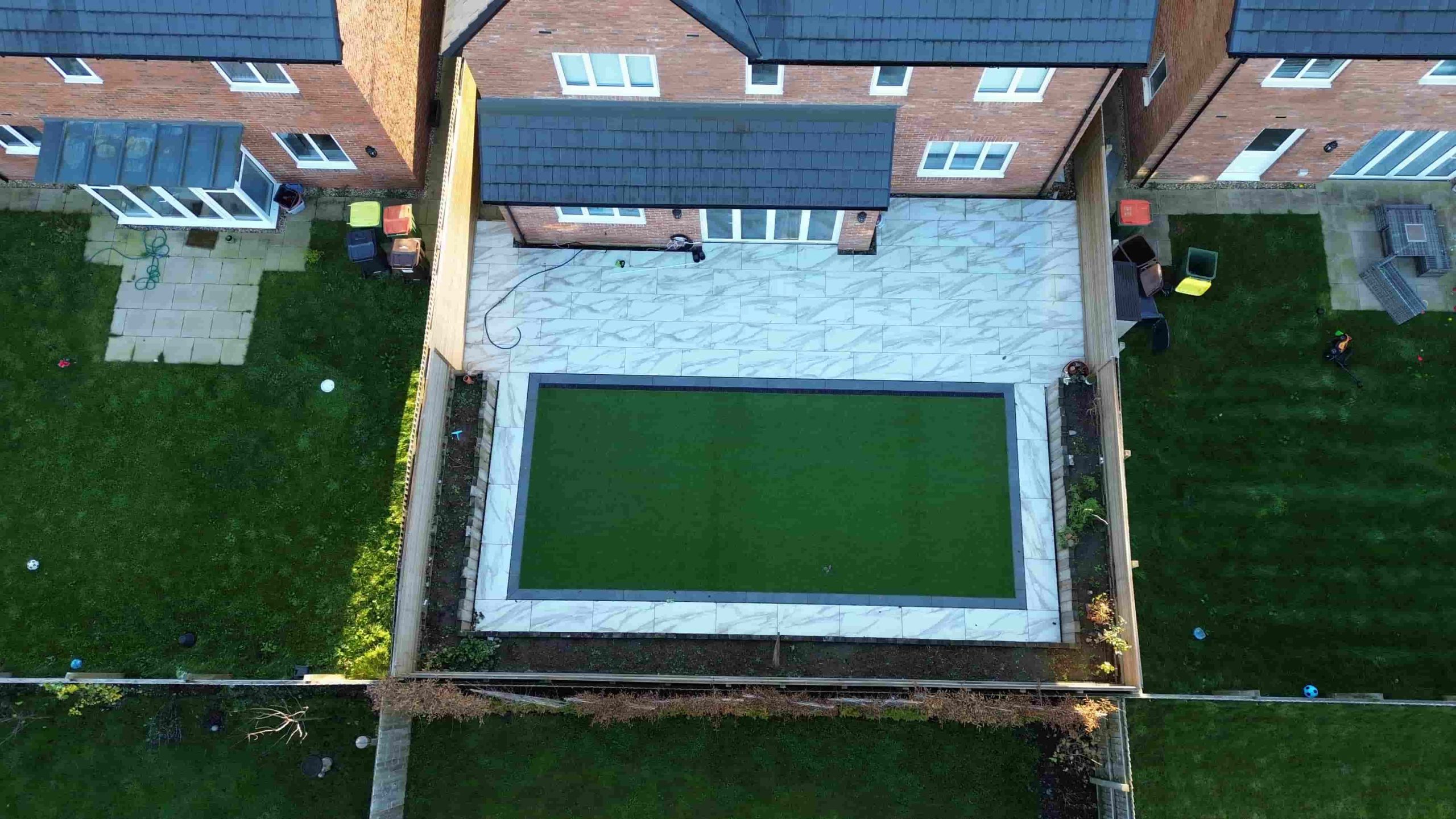
Before settling on the split, allow enough room to pull chairs away from a table and walk between the house, gate and shed. Plan changes in level and drainage alongside the appearance of the paving.
For a fitted garden lawn, our artificial grass installation service covers the practical preparation behind the finished surface.
2. Use faux grass to soften awkward corners
Narrow side returns, corners beside a patio and irregular spaces can become useful parts of the garden. A shaped area of turf can soften the layout, but it should still have a purpose: somewhere to sit, a route to another area or a place for everyday play.
- Follow the existing shape where it creates a useful, straightforward layout.
- Keep access to gates, drains and storage clear.
- Avoid narrow decorative strips that make brushing and clearing leaves unnecessarily awkward.
3. Frame the lawn with raised beds or clean edging
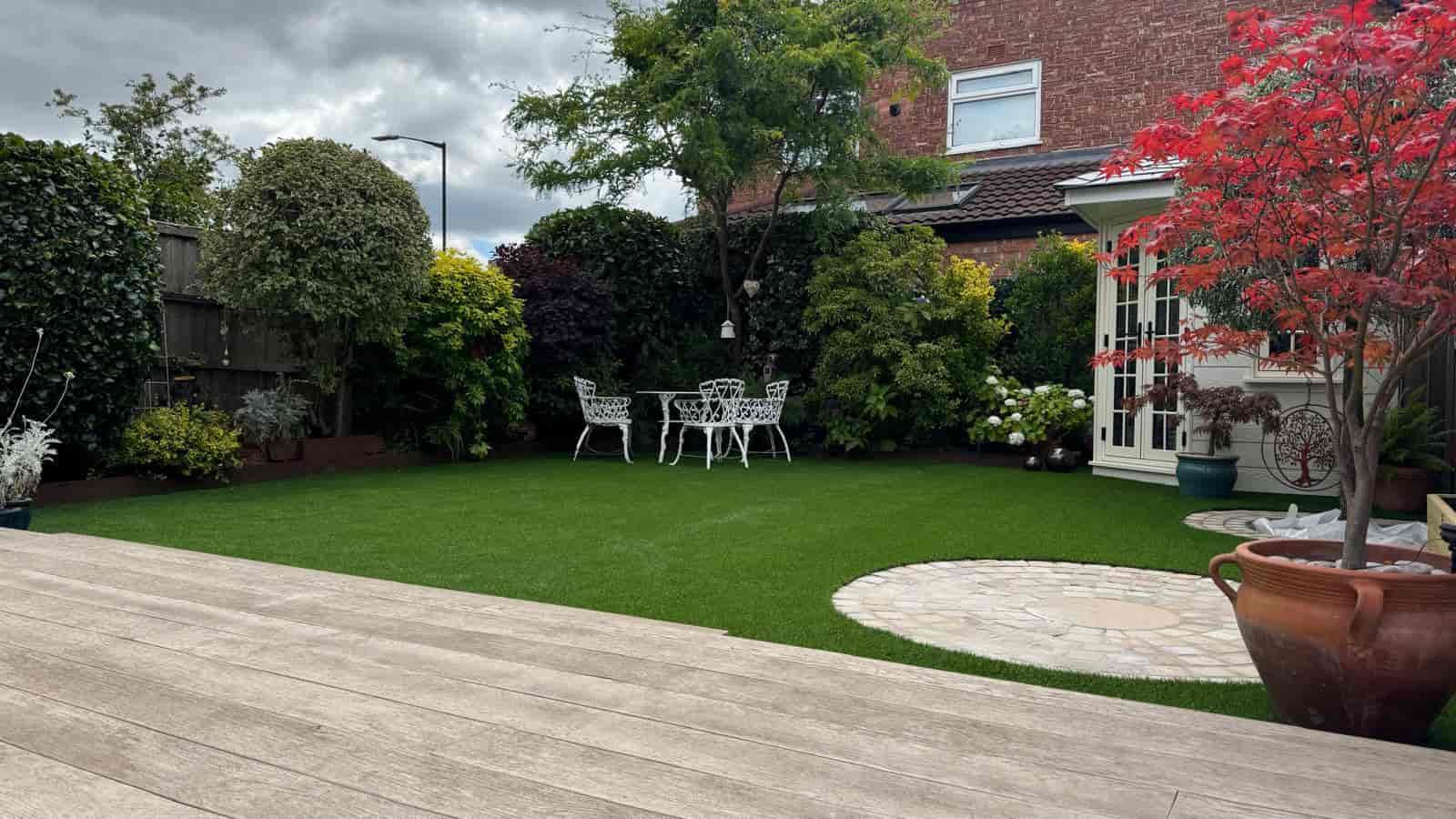
Timber planters, brick edging, paving and planted borders can all give an artificial lawn a defined outline. Keep space for living plants so there is variation in colour, height and texture alongside the turf.
The Sale garden shown below uses a circular paving feature to break up the lawn’s shape. You could take a similar approach around a seating spot, or use a simple rectangular border for a more structured design. See the Sale garden installation for more photographs.
Faux Grass for Small Gardens and Courtyards
In a smaller garden, start with the space you need for furniture, access and planting. Fit the lawn around those requirements rather than trying to squeeze in every idea.
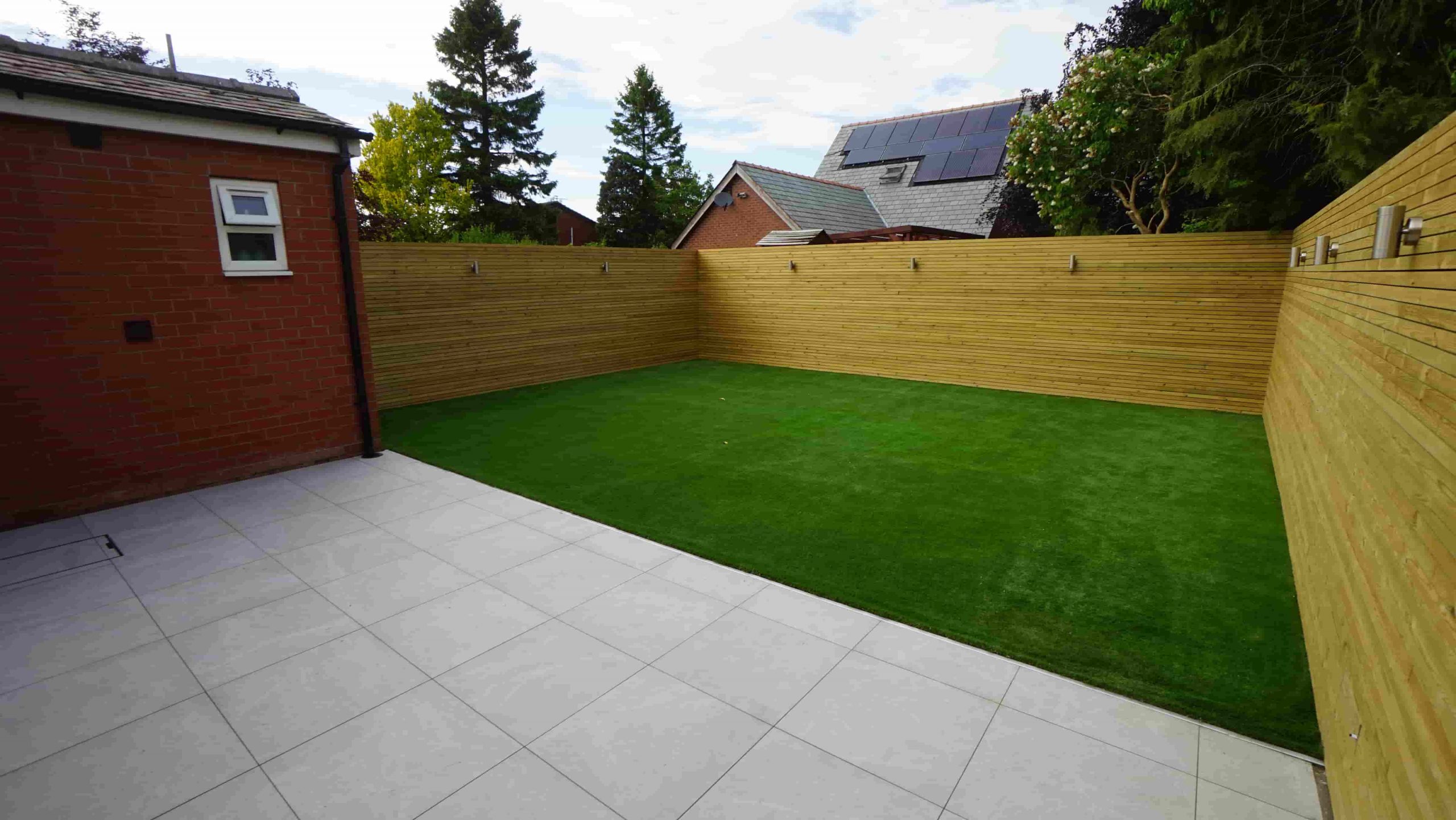
- A single lawn rectangle: keeps the design straightforward and leaves room for a patio or planted border.
- A courtyard lawn zone: adds a green surface beside seating without taking over the whole yard.
- A shaped edge: can work around an existing bed, tree or garden feature.
For layouts closer to a terraced house or compact urban plot, see our guide to artificial grass in small terraced gardens.
Family-Friendly Garden Layouts with Artificial Grass
Give play, seating and everyday routes enough room to work together. An open lawn beside a patio can be more adaptable than several small areas separated by decorative features.
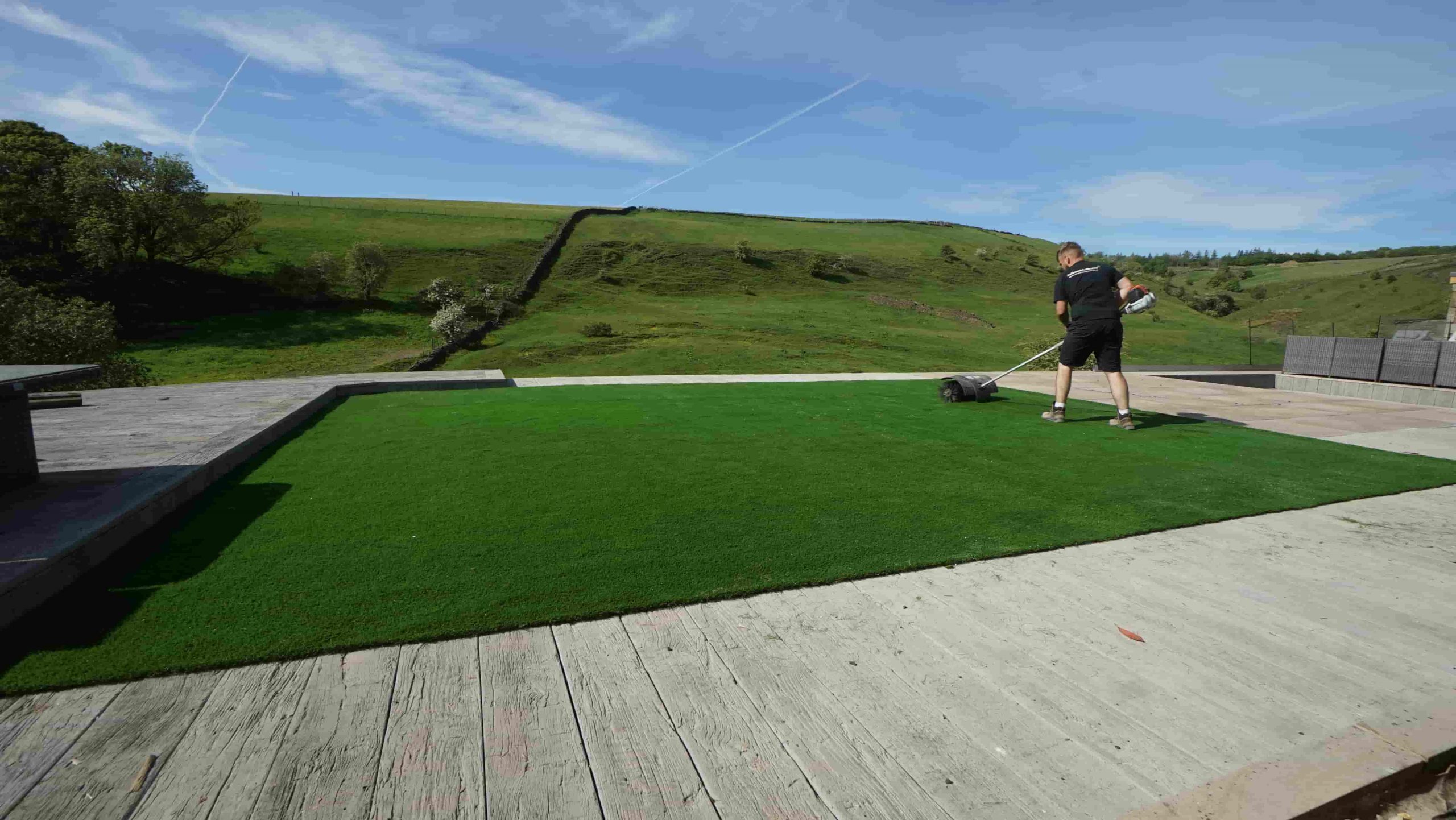
Create a play zone
Decide where toys and play equipment will sit before choosing the lawn shape. Keep routes to doors and gates separate where possible, and consider how the garden will work as children grow.
Choose the base and any required safety surfacing around the equipment you plan to use. Our playground surfacing page and guide to trampolines on artificial grass cover those more specific decisions.
Blend turf with hard-wearing paths
A path to the shed or a paved route beside the house can make daily movement easier. Plan it where people naturally walk, with the lawn and planting arranged around it.
Pet-Friendly Landscaping Ideas
For gardens with dogs, think about cleaning and access as well as appearance. A side area or smaller turf zone may suit the layout, while a larger open lawn gives pets and people a shared space.
- Allow convenient access for rinsing and cleaning.
- Discuss drainage, backing and secure edges when choosing the turf and installation.
- Keep planted beds, seating and the main walking route clearly defined.
Artificial grass still needs care when dogs use it. Our dog-friendly artificial grass service explains the installation options and what to discuss at the survey.
Roof Terraces, Balconies and Awkward Spaces
A section of artificial grass can add a different texture to a balcony, enclosed paved yard or roof terrace. It can sit alongside planters and outdoor seating instead of covering the entire surface.
Ask the installer to assess the existing surface, drainage and fixing method before committing to a layout. For these settings, read our guidance on covering decking and patios and artificial grass on flat roofs.
Can faux grass be used as a design feature, not just a lawn?
Yes. A shaped lawn, a border around seating or a contrast between turf and paving can all become part of the design. Straight lines suit a structured layout; curves can work around established planting or a circular patio.
For a different setting, such as a school or branded commercial space, coloured artificial grass offers another design option.
What landscaping mistakes should you avoid with faux grass?
- Choosing the lawn shape before planning access: leave usable routes to doors, gates and storage.
- Ignoring the base and drainage: deal with the ground conditions before focusing on the surface.
- Adding too many materials and shapes: a few well-chosen features are easier to bring together.
- Forgetting maintenance: allow room to brush the turf, clear leaves and clean areas used by pets.
- Copying a photograph without adapting it: check the idea against your garden’s dimensions, levels and daily use.
Is faux grass a good choice for modern garden design?
It can suit a modern garden when it is combined with defined seating areas, planting and well-finished edges. The important choice is how much space each element needs, rather than how much turf you can fit into the garden.
Frequently Asked Questions About Landscaping with Faux Grass
What can I do with faux grass besides replace a lawn?
Use it for a smaller garden zone, beside a patio, around a seating feature or within a courtyard. Match the shape to a specific use and leave room for access and planting.
Does faux grass work well in small gardens?
It can. A simple lawn area alongside paving or borders often gives a small garden enough variety without making the layout complicated.
Can you combine faux grass with paving or decking?
Yes. Our project photographs show how paving and artificial lawns can work together. Plan the edge details, drainage and any changes in level before installation.
Is faux grass good for family gardens?
It can provide a useful lawn area for everyday use. Choose the layout, base and surfacing around the activities and play equipment you want to accommodate.
Can faux grass work on balconies or roof terraces?
It may be suitable, subject to assessment of the existing surface, drainage and installation method. Get advice for the particular balcony or roof before choosing the design.
Does faux grass always have to look like a traditional lawn?
No. It can form a smaller zone or a shaped design feature alongside paving, seating and planting.
Plan an Artificial Lawn That Fits Your Garden
Tell us how you use the space and which ideas appeal to you. Photographs, rough dimensions and details of access will help us discuss the lawn, groundwork and finish with you.
Explore our garden installation service or contact the team to arrange a survey.
