LAWN CARE / CLEAR THE MOSS, CHECK THE CAUSE
A cleaner lawn starts
with a gentler approach.
To get moss out of artificial grass, clear loose debris, brush out light growth with suitable plastic or nylon bristles, and collect what comes free. If treatment is still needed, confirm compatibility and follow its instructions. Then address the conditions that let moss return.
Our maintenance team helps homes, schools and businesses across Manchester and the North West. A small patch may need routine care; widespread growth, slippery areas or persistent puddles deserve a closer look.
01 / START WITH THE CONDITION OF THE LAWN
What should you do next?
Three quick choices give you a care checklist and useful notes for an enquiry. The tool does not identify growth or prescribe a chemical.
No contact details needed. This tool does not submit or store your choices.
Match the care to the problem.
Tell us what you can see. We’ll highlight what to do gently, what to check and when an inspection is the better next step.
These are planning notes. Product suitability and the condition of the lawn still need checking.
The removal steps and advice below remain available without JavaScript.
02 / A PRACTICAL REMOVAL SEQUENCE
How to get moss out of artificial grass
For light growth on a sound lawn, work through these steps. Stop if the surface is slippery, seams are lifting or the brush catches damaged turf.
Clear leaves and loose debris
Pick up twigs and larger pieces, then use a suitable plastic rake or brush for loose leaves and dirt. Work carefully around joins and borders. Collect the material rather than pushing it into another corner.
This exposes the affected area so you can judge whether the growth is isolated or part of a wider build-up.
Brush out light growth
Use plastic or nylon bristles suitable for your turf. Work in small sections with controlled strokes against the pile direction. Lift the fibres and loosen surface growth without scraping hard at the backing.
Collect the loosened moss as you go. Avoid forcing through heavily matted areas or catching a seam. See the artificial grass brushing guide for equipment and technique.
Treat remaining growth only if needed
If brushing is not enough, check the turf manufacturer’s care instructions and the proposed product’s label. Confirm suitability for the turf, backing, infill and nearby materials before applying anything.
Follow any patch-test instructions. A successful small test does not override restrictions on the label or prove every part of the installation is compatible.
Follow the timing for rinsing and reuse
Do not assume every treatment needs rinsing immediately. Follow its directions for contact time, any rinse, repeat treatment and when people or pets can return. There is no universal waiting period.
Where ordinary rinsing is appropriate, use a controlled hose flow in line with the turf’s care advice. Repeatedly soaking an already waterlogged section will not fix the cause.
Collect residue and check after rain
When the product instructions allow, remove loosened growth and give the surface a final gentle brush. Photograph the area, then check it during the next wet spell.
If moss returns in the same place, look for recurring debris, shade and lingering water before repeating treatment.
03 / LOOK AT WHAT IS SITTING IN THE PILE
Why does moss grow on artificial grass?
Moss can establish in dirt and organic matter on the surface. Shade, moisture and undisturbed debris can work together.
Check shaded corners during wet weather. Where practical, manage overhanging planting to improve light and airflow without damaging the lawn.
Moss does not prove the installation is faulty.
Debris and shade can affect a sound lawn. Persistent puddles, soft spots or settlement are a separate reason to inspect the levels, base and drainage route. Our artificial grass drainage guide explains that distinction.
04 / CHECK THE PRODUCT, NOT JUST THE PROMISE
Can you use moss killer on artificial grass?
Only when the product’s permitted use and the turf’s care requirements support it. “For lawns” may refer to natural grass; “patio cleaner” is not a turf specification.
Five things the instructions need to settle
If an answer is missing, ask the supplier or installer. Do not fill the gap with a stronger mixture or a household recipe.
- Use and userDoes it cover this surface and problem, and is it suitable for the person applying it?
- CompatibilityWhat do the turf and treatment suppliers say about the backing, infill and surrounding materials?
- ApplicationWhat dose, weather conditions, contact time and protection are required?
- AftercareShould it be left, rinsed or brushed out, and when?
- Access and surroundingsWhen can people and pets return, and what restrictions apply near plants, drains or water?
HSE’s garden pesticide guidance explains product checks and following the label. Do not increase the dose or mix cleaning chemicals. Professional-use products are not a shortcut for an untrained householder.
What is the best moss killer?
There is no responsible universal product recommendation without knowing the turf and proposed treatment. Start with gentle removal for a light patch. If a product is needed, suitability and clear instructions matter more than a “strongest” claim.
Will vinegar or bleach do the job?
We do not recommend improvised vinegar, bleach or salt treatments for artificial turf. A familiar household ingredient is not proof of compatibility with fibres, backing, infill or nearby surfaces. Use the care guidance for your installation.
Keep the cure from becoming a repair
Skip sharp tools
Metal brushes and scraping can damage the surface. Stop if a brush snags a loose join or exposed backing.
Avoid aggressive jets
A concentrated pressure-washer jet can disturb infill and vulnerable edges. Check the turf’s care instructions before using one.
Collect what you loosen
Leaving moss and dirt in the pile creates more debris. Removal includes gathering it up, not just moving it around.
05 / KEEP THE ROUTINE REALISTIC
How do you stop moss coming back?
Reduce the conditions that encourage it. No treatment guarantees a permanently moss-free lawn.
Clear little and often
Check the corners where leaves gather. Keep soil from borders from spilling onto the turf, and collect debris before it becomes a damp layer.
Notice what stays wet
Record recurring puddles and slow-drying patches. A fixed weekly brushing schedule cannot repair a base or outlet problem.
Match care to use
Follow the manufacturer’s guidance for brushing and cleaning. A shaded lawn under trees usually needs more attention than an open one.
CARE AFTER INSTALLATION / WILMSLOW
A care plan belongs with the surface.
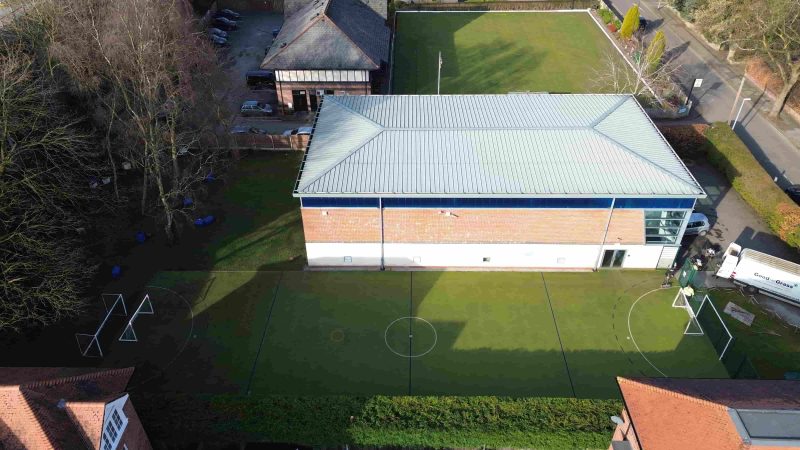
Our Wilmslow Preparatory School case study records a later professional deep clean and guidance on ongoing care.
School and shared surfaces need a programme suited to their turf, infill and use, with access managed during maintenance. A domestic care routine is not a specification for every sports surface.
Explore the Wilmslow project →
Planning a new surface nearby? See our artificial grass installation coverage in Cheshire.
When should you call a professional?
Ask for help with widespread or heavily matted growth, a slippery surface, deep compacted dirt, lifting joins or persistent waterlogging. Keep slippery or damaged areas out of use while they are assessed.
Our maintenance and repair service can assess lawns installed by other companies too. Send the original turf details if available, photographs, the approximate size and a record of products or cleaning already tried.
Replacement is not the automatic answer. A clean, a targeted repair or a drainage investigation may be more appropriate. If a new lawn is needed, our installation team can assess the groundwork as well as the turf.
QUICK ANSWERS
Moss removal FAQs
Clear answers before you reach for a brush or bottle.
Can I brush moss out of artificial grass?
Light surface growth can often be loosened with a suitable plastic or nylon brush and collected. Do not scrape the backing or force a brush through damaged joins. Heavily matted growth may need professional care.
Does moss mean my artificial grass was installed badly?
Not necessarily. Shade and trapped debris can contribute on an otherwise sound lawn. Persistent puddles, soft spots or settlement need a separate assessment of levels, layers and drainage.
What kills moss on artificial grass?
A suitable, compatible treatment may be an option when gentle removal is insufficient. Check the product’s permitted use and your turf’s care guidance. There is no one chemical suitable for every installation.
Should I rinse after moss treatment?
Only as the product instructions direct. Some products need time in place to work. Follow the directions for rinsing, removal of dead growth and reuse of the lawn.
When can children or pets go back on the lawn?
Follow the treatment label’s restrictions and the condition of the surface. There is no universal waiting time. Keep slippery or damaged areas out of use until they are suitable for access.
Will vinegar kill moss without damaging the grass?
Do not assume that it will. We do not recommend homemade vinegar treatments for artificial turf. Check the turf manufacturer’s care instructions and use only an appropriate, compatible treatment if one is needed.
How do I deal with moss and weeds together?
Clear loose debris and assess the growth carefully. Do not assume that one product covers both problems or is suitable for synthetic turf. Avoid pulling at growth that is caught in a join; ask for advice if the backing or fixing may be affected.
Will a new roll stop moss returning?
Replacing the turf does not remove shade, recurring debris or an underlying drainage problem. Establish the cause before deciding that replacement is necessary.
GET A USEFUL NEXT STEP
Show us what
your lawn needs.
Send a few photographs and tell us where the growth appears, whether the area stays wet and what you have already tried. We can discuss cleaning, repair or further inspection.
Ready to send the details? Contact our team.
- Postcode, approximate lawn size and photographs.
- Where growth appears and whether it returns.
- Puddles, slippery areas or damaged joins.
- Any treatment used, including the product name.
- Pets, children or shared access to plan around.