Choosing the right artificial grass brush makes a big difference to how your lawn looks and lasts. Over time, the pile can flatten from foot traffic, pets, garden furniture or general use. A stiff plastic broom, artificial grass rake or power brush can help lift the fibres, remove debris and bring tired turf back to life.
In this guide, we’ll explain the best brush for artificial grass, when to use a manual brush, when a power brush is worth it, how much artificial grass brush hire usually costs, and how to brush your lawn without damaging the fibres.
Jump to:
- Why Brushing Artificial Grass Matters
- How to Brush Artificial Grass (Step-by-Step)
- How Often Should You Brush Artificial Grass?
- Best Brush for Artificial Grass
- Artificial Grass Brush Options Compared
- Types of Brushes for Artificial Grass
- Power Brushes vs Manual Brushing
- Common Brushing Mistakes
- Hiring a Power Brush for Artificial Grass
- FAQs About Brushing Artificial Grass
Why Brushing Artificial Grass Matters
Artificial grass blades are designed to stand upright, mimicking the look and feel of natural grass. But over time, regular use – from garden furniture, kids, pets, or even just walking over it – can cause the pile to flatten. Brushing helps:
- Lift and revive flattened fibres
- Maintain a natural, lush appearance
- Even out high-traffic areas
- Extend the life of your lawn
Without regular brushing, artificial turf can start to look matted, especially in shaded or damp areas where the fibres don’t recover naturally.
How to Brush Artificial Grass (Step-by-Step)
You don’t need fancy equipment to keep your lawn looking sharp – just the right technique.
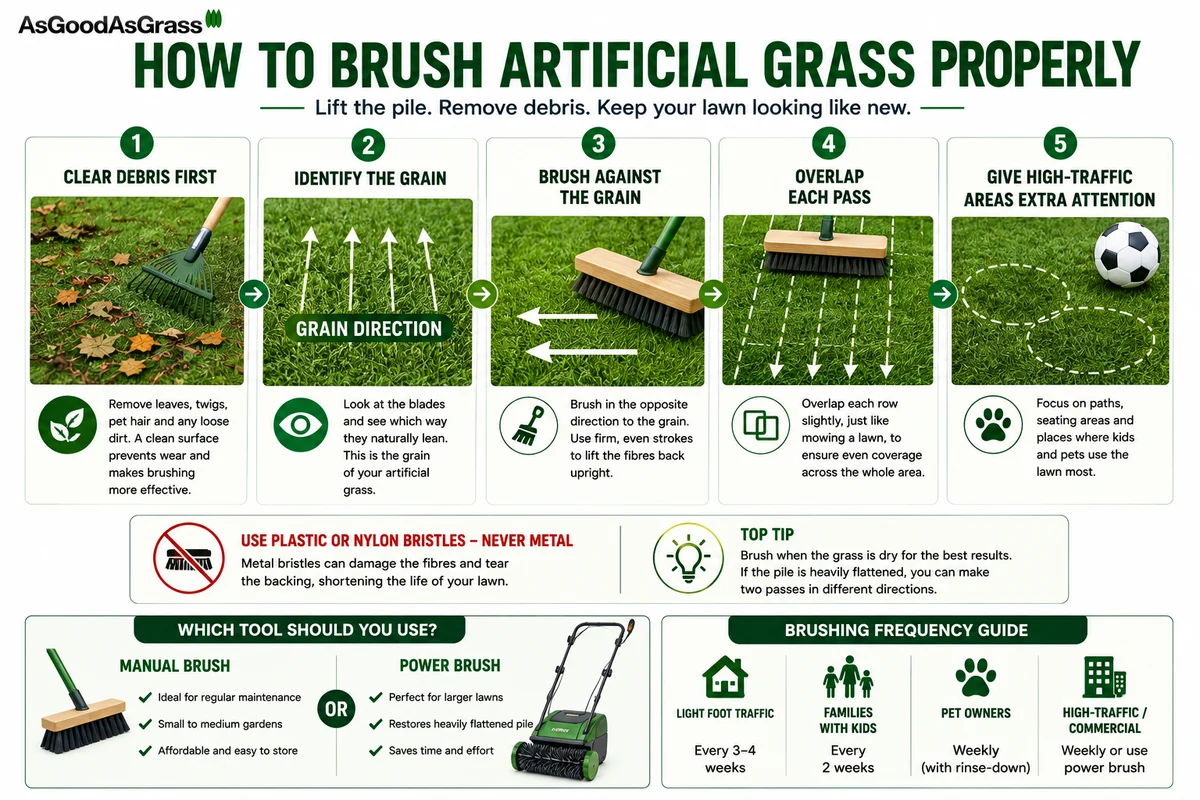
- Clear any debris – Remove leaves, twigs and pet mess first.
- Use a stiff-bristled broom or artificial grass rake – Avoid metal bristles which can damage the fibres.
- Brush against the grain – Work against the natural direction of the grass pile to lift the fibres upright.
- Overlap your strokes – Like mowing a lawn, overlapping helps ensure full coverage.
- Repeat for high-traffic areas – Focus extra attention where the turf looks most tired.
For a faster and more effective job, especially on large gardens, a power brush is worth considering.
How Often Should You Brush Artificial Grass?
It depends on how your lawn is used:
| Usage | Brushing Frequency |
|---|---|
| Light foot traffic | Every 3–4 weeks |
| Families with kids | Every 2 weeks |
| Pet owners | Weekly (with a rinse-down) |
| High-traffic or commercial | Weekly or use power brush |
Best Brush for Artificial Grass
The best brush for artificial grass has stiff synthetic bristles (plastic or nylon) that can lift fibres without damaging them. Avoid metal bristles, which can tear the backing. For small gardens, a wide push broom or specialist artificial grass rake works well. For larger areas, a powered artificial grass brush – also called a turf power broom – saves time and gives more consistent results.
Some popular options include:
- Wide head push brooms with stiff nylon bristles
- Artificial grass rakes with curved plastic tines
- Electric or petrol power brushes for big lawns or commercial spaces
If you’re unsure which brush is right for you, check our maintenance service – we can recommend tools or handle the brushing for you.
Best Brush for Artificial Grass by Garden Type
Different gardens need different tools. The best brush for artificial grass depends on lawn size, foot traffic, and whether you’ve got pets. Use the guide below to match the right brush to how your space is actually used.
- Small garden or balcony: Wide stiff push broom or plastic artificial grass rake
- Medium family garden: Telescopic astro turf brush with nylon bristles
- Large garden: Electric power brush for faster, even results
- Pet-friendly lawn: Power brush combined with regular rinsing
- Commercial or sports turf: Petrol-powered brushing machine
Artificial Grass Brush Options Compared
There are three main brush options for artificial grass: a stiff broom, a plastic rake, or a power brush. The right choice depends on the size of the lawn and how flat or dirty the turf has become.
| Brush Type | Best For | Worth It? |
|---|---|---|
| Stiff plastic broom | Small gardens, regular light brushing, quick tidy-ups | Yes — cheapest and safest option for most homes |
| Plastic artificial grass rake | Leaves, pet hair, light debris and gentle pile lifting | Good as a secondary tool |
| Electric artificial grass power brush | Large gardens, flattened pile, annual deep maintenance | Worth it for bigger or tired lawns |
| Petrol turf brush | Commercial spaces, sports turf, heavy-duty maintenance | Usually overkill for domestic lawns |
Types of Brushes for Artificial Grass
Not all brushes are created equal. The right choice depends on your lawn size, budget, and how much effort you want to put in. Here’s a breakdown of the most popular options:
| Brush Type | Pros | Best For |
|---|---|---|
| Manual stiff broom | Cheap, easy to store, safe on turf | Small gardens, quick spruce-ups |
| Plastic lawn rake | Gentle on fibres, lifts debris well | Removing leaves and pet hair |
| Telescopic astro turf brush (e.g. Spear & Jackson) | Extended reach, ergonomic | Medium-sized lawns, less bending |
| Electric power brush (e.g. VonHaus, Makita, Crytec) | Fast, consistent, deep clean | Large gardens, professional finish |
| Petrol power brush | Heavy-duty, no cables | Commercial lawns, sports turf |
Pro tip: Always choose plastic or nylon bristles. Metal bristles can tear the turf backing and shorten the life of your lawn.
Power Brushes vs Manual Brushing
Manual brushing is perfectly fine for smaller areas – but if you want to save time, a power brush can be a game-changer.
| Tool | Pros | Best For |
|---|---|---|
| Manual brush | Cheap, simple, no power needed | Small gardens, spot maintenance |
| Power brush | Fast, consistent results, easy on the arms | Large gardens, professional finish |
Whichever method you choose, our pro maintenance service can handle the job for you if time’s tight.
Common Mistakes When Brushing Artificial Grass
Most damage to artificial grass doesn’t come from lack of maintenance — it comes from using the wrong tools or brushing the wrong way. Avoid these common mistakes to keep your lawn looking good and performing properly.
- Using metal rakes or wire brushes – these can tear fibres and damage the backing
- Brushing with the grain – this flattens fibres instead of lifting them
- Brushing too aggressively – light, even pressure works best
- Skipping debris removal first – grit and stones increase wear
- Overusing power brushes – occasional deep brushing is enough
Hiring a Power Brush for Artificial Grass
If you don’t want to buy a machine, artificial grass power brush hire can be a sensible option for a one-off refresh. Some tool hire shops offer turf brushes or power brooms, and many installers also include power brushing as part of a professional maintenance visit.
- Typical hire cost: often around £20–£40 per day, plus a refundable deposit.
- Best use case: annual deep cleaning, large gardens or reviving flattened turf.
- Alternative: book a professional maintenance visit if you do not want to collect, use and return the machine yourself.
If your lawn feels compacted, patchy, or permanently flat, hiring a power brush once a year is often enough to restore its original look without the cost of buying a machine.
Tip: If your garden is small, it’s usually cheaper to stick with a stiff broom. Hire a power brush when your turf needs a full refresh, or if you have a large lawn to cover.
FAQs About Brushing Artificial Grass
Got questions about how to brush your artificial lawn without causing damage? You’re not alone. Here are some of the most common queries we get from customers – from the best tools to use, to how often brushing should be done.
Do I really need to brush artificial grass?
Yes – brushing helps keep fibres upright and prevents the lawn from looking flat or tired.
Can you rake artificial grass?
Yes, but only with a plastic-tined rake designed for artificial grass. Metal rakes can tear the fibres and damage the backing, shortening the lifespan of your lawn.
Will brushing remove pet hair?
Yes – regular brushing helps remove pet hair, especially with a power brush. You can rinse first with a hose for best results.
Can brushing damage my lawn?
Not if done correctly. Avoid brushing aggressively or using metal tools. Always go against the grain with light, even pressure.
What is the best brush for artificial grass?
The best brush for artificial grass is a stiff plastic or nylon-bristled broom that lifts fibres without damaging them. For larger lawns or heavily used areas, an electric power brush delivers faster, more consistent results. Avoid metal bristles, as they can tear the turf backing.
What is the best artificial grass brush in the UK?
For most UK homes, the best artificial grass brush is a stiff plastic or nylon-bristled broom with a wide head. It is simple, affordable and safe for regular use. Electric power brushes are better for larger lawns, heavily flattened grass or annual deep maintenance.
Can I hire a power brush for artificial grass?
Yes – many tool hire companies and installers offer power brush hire for turf. This can be cost-effective for a one-off deep clean.
How often should you power brush artificial grass?
For light-use gardens, once or twice a year is enough. High-traffic or pet-friendly lawns benefit from quarterly power brushing to keep fibres upright and debris-free.
Is it worth hiring a power brush instead of buying?
If you only plan to deep clean once or twice a year, hire is cheaper. For pet owners or large lawns, investing in your own electric brush can pay off quickly.
What is power brushing in artificial lawn maintenance?
Power brushing uses a motorised rotating drum of bristles to lift fibres, remove compacted debris, and restore the turf to its original “just installed” look.
Can I use a garden rake on fake grass?
Yes, but only a plastic rake. Metal rakes risk tearing the backing and damaging the fibres.
Is a broom or rake better for artificial grass?
A stiff plastic broom is usually better for lifting the pile, while a plastic rake is better for removing leaves, pet hair and loose debris. Many homeowners use both: rake first to clear the surface, then brush against the grain to lift the fibres.
Too Much Hassle? Let Us Handle It
Our professional maintenance team use industrial-grade power brushes to revive tired lawns. We’ll lift the pile, clear debris, and leave your turf looking freshly installed.