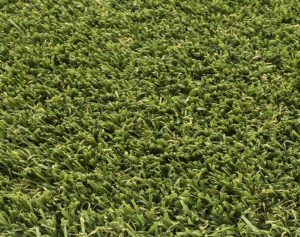
The best artificial grass for a garden putting green is a short-pile, dense golf turf installed over a smooth, stable base. Standard landscape grass may look attractive, but its longer, softer fibres usually slow the ball and create a less predictable roll.
A proper garden putting green should be designed around how you want to practise. That includes the pace of the surface, number of holes, shape, contours, drainage and whether you want a longer fringe around the main putting area.
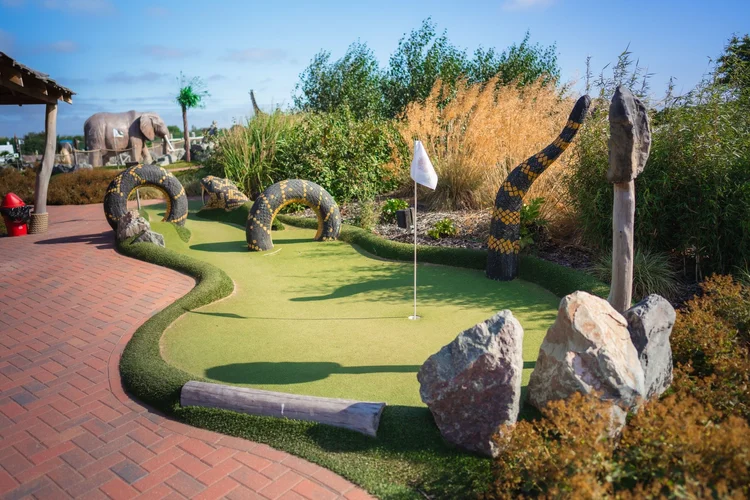
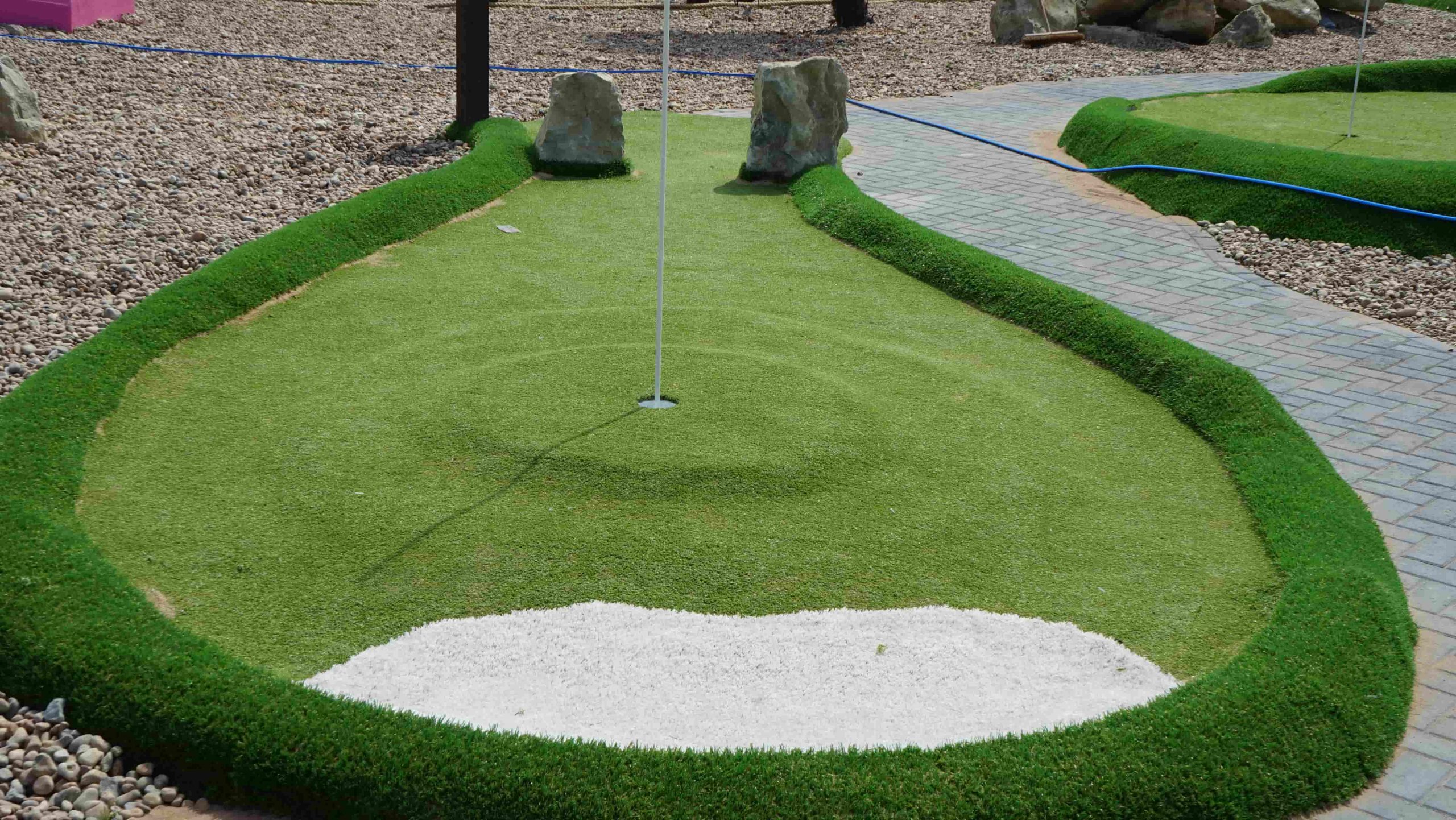
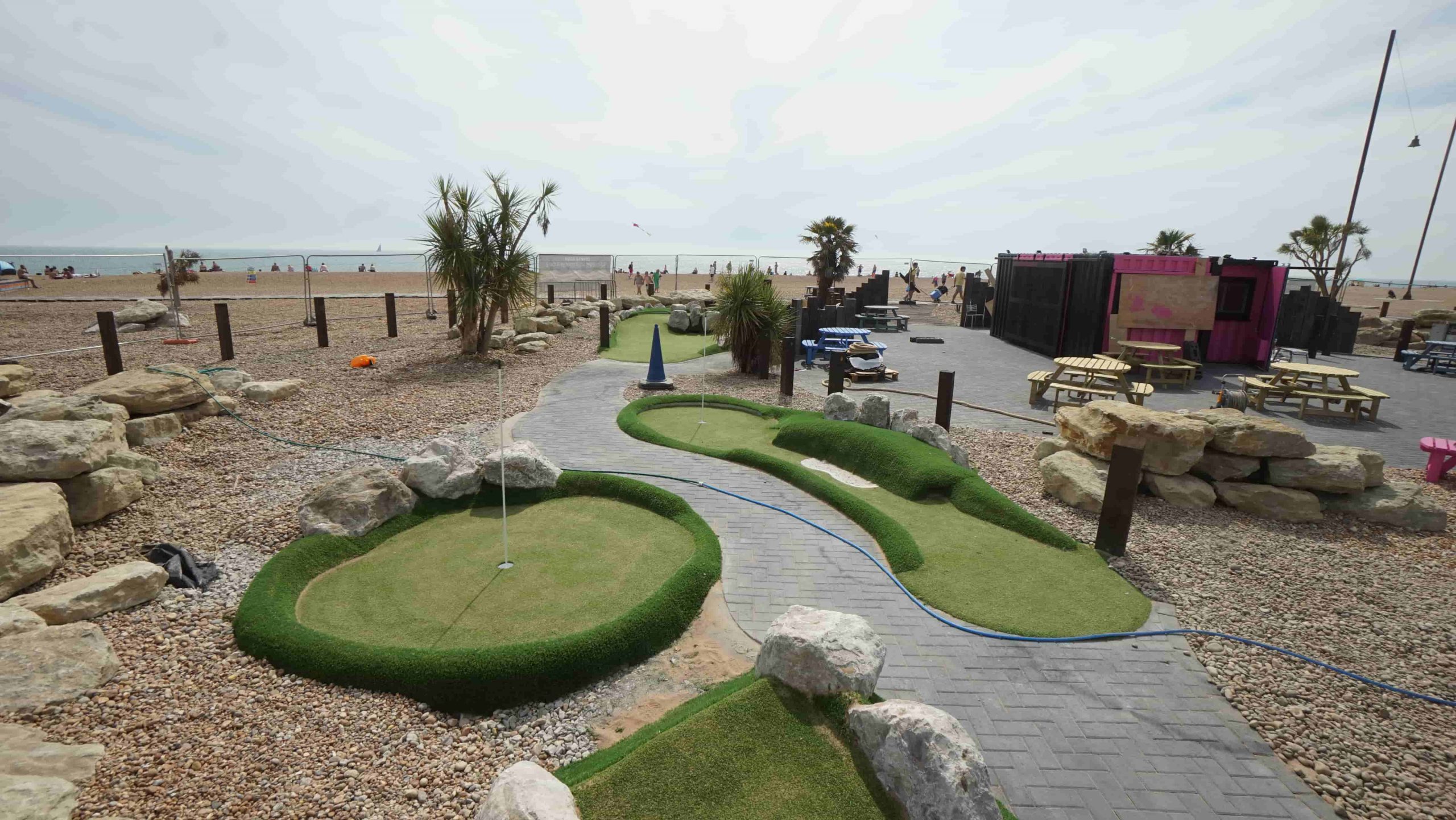
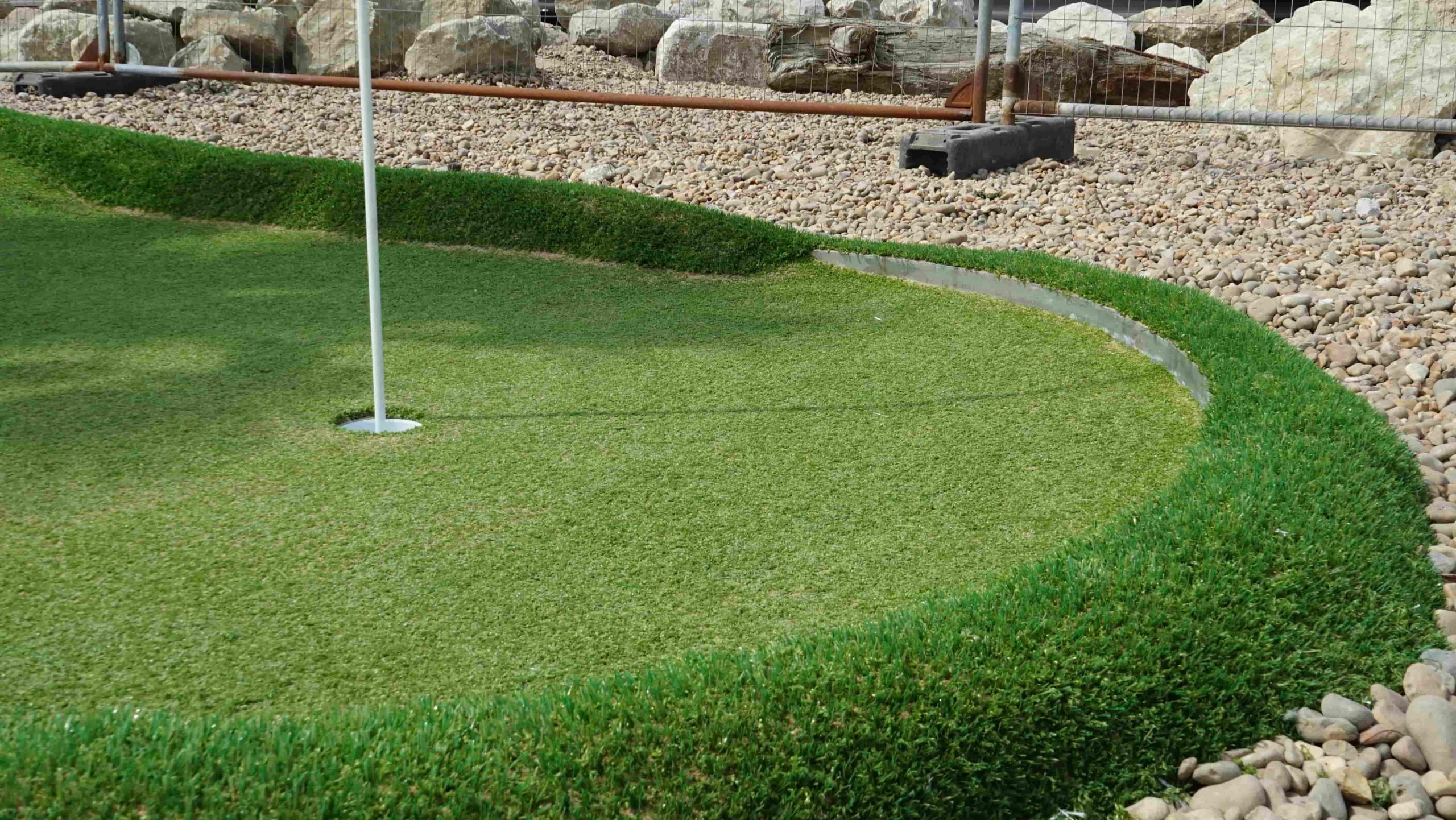
As Good As Grass uses specialist golf turf for putting surfaces. On our 400m² Folkestone mini golf installation, for example, we fitted 10mm Golf Pro turf to create a smooth surface with controlled ball speed and precise transitions around curves and concrete edging.
⛳ Quick Answer: What makes good garden putting turf?
- Choose specialist short-pile golf turf rather than standard landscape grass.
- Look for a dense, even surface that allows a clean and predictable ball roll.
- The base beneath the grass matters just as much as the turf itself.
- Gentle contours can create realistic breaks, but accidental bumps produce inconsistent play.
- A longer landscape turf can be used around the green as a decorative fringe or rough.
- The entire system should be designed around drainage, intended ball speed and frequency of use.
Planning a Putting Green for Your Garden?
Tell us about your space, practice goals and preferred layout. We can help you choose the turf, shape the surface and install a garden putting green that plays as good as it looks.
🔑 Quick Takeaways
- Normal garden grass is usually too long and soft for a realistic putting surface.
- A short, dense golf turf gives the ball a cleaner and more consistent roll.
- Good preparation is essential because the turf will follow imperfections in the base.
- The fastest surface is not automatically the best surface for every golfer.
- Cups, breaks and fringe areas should be planned before installation begins.
- A garden putting green can be integrated into a wider artificial lawn or installed as a dedicated practice area.
🧭 Jump to:
💡 Quick Answer: The best artificial grass for a garden putting green is a specialist short-pile golf turf with a dense, uniform surface. It should be fitted over a firm, accurately prepared base because small imperfections underneath can affect the direction and speed of the ball.
What Is the Best Artificial Grass for a Garden Putting Green?
The best choice is normally a turf designed specifically for putting.
A good garden putting surface should provide:
- A short and even pile
- Dense fibre coverage
- Consistent resistance across the green
- A clean roll without excessive bouncing
- A stable finish around cups and joins
- Durability under repeated foot traffic
- Suitable drainage for outdoor use
The grass that feels softest underfoot is not necessarily the best for golf.
Landscape turf is designed to resemble a natural lawn. It commonly uses longer fibres, several colours and a soft thatch layer to create a realistic appearance. Those same features can interfere with a golf ball.
Putting turf is selected for playability first. The pile is shorter and the surface is more uniform, allowing the ball to travel with less interference.
At the Folkestone course, As Good As Grass installed specialist 10mm Golf Pro turf. That specification suited the prepared base, course design and required ball behaviour. It does not mean 10mm is the only possible choice for every garden, but it shows why a purpose-made golf product is preferable to ordinary lawn grass.
Putting Green Turf vs Normal Garden Artificial Grass
Both products are artificial grass, but they are designed for different jobs.
| Feature | Specialist Putting Turf | Landscape Artificial Grass |
|---|---|---|
| Main purpose | Consistent putting performance | Creating a realistic-looking lawn |
| Pile | Short and uniform | Usually longer and softer |
| Ball roll | Cleaner and more predictable | Slower and potentially inconsistent |
| Appearance | Closely cut golf surface | Designed to resemble a domestic lawn |
| Best garden use | Main putting line and practice area | Surrounding lawn, fringe or decorative rough |
| Base tolerance | Needs a particularly accurate base | Still needs good groundwork, but tiny changes are less noticeable during normal lawn use |
You can combine the two.
A short putting surface can form the playable green, while a longer landscape turf creates a fringe around it. This gives the practice area more definition and helps it blend into the wider garden.
For commercial courses, obstacles and higher footfall introduce different requirements. Our existing guide to the best artificial grass for mini golf and crazy golf covers that separate use in more detail.
What Pile Height Is Best for an Artificial Putting Green?
Short-pile turf is usually best for the playable surface.
Long fibres can:
- Catch and slow the ball
- Create an inconsistent direction of travel
- Move differently after being walked on
- Make the green feel more like a lawn than a putting surface
AGAG’s Folkestone installation used 10mm Golf Pro turf, which produced the short, controlled surface required for mini golf.
The correct specification for a private garden still depends on the product, base, amount of infill and type of practice required. Pile height should not be selected in isolation.
A slightly longer surface is not automatically wrong if the aim is relaxed family play. However, golfers wanting to practise pace, line and break will normally benefit from a shorter and more consistent surface.
What Controls the Speed of an Artificial Putting Green?
The turf affects ball speed, but it is not the only factor.
The final pace can be influenced by:
- Pile height
- Fibre density
- Direction of the pile
- The type and amount of infill, where specified
- Base firmness
- Gradient and contours
- Moisture and surface debris
- How recently the turf has been brushed
That means two greens using the same product could play differently if their bases, contours or maintenance differ.
The fastest possible surface is not necessarily the most useful.
A garden green should be matched to the type of courses you normally play and what you want to practise. Some golfers want a relatively quick, testing surface. Others want a more forgiving green for family use.
If pace matters, discuss it before the turf and installation system are chosen.
Why Does the Base Matter So Much?
The base is one of the most important parts of a garden putting green.
Short turf follows the surface beneath it closely. A small ridge, hollow or soft patch that would barely be noticed under longer landscape grass can alter the direction of a putt.
The base needs to be:
- Stable
- Accurately shaped
- Properly compacted
- Smooth beneath the finished turf
- Designed to drain
- Firm enough to retain its intended contours
The correct construction depends on whether the green is being installed over soil, concrete or another existing surface.
Outdoor soil-based installations usually require excavation and a purpose-built aggregate system. Hard-surface installations may use a different fitting method or specialist underlay.
There is no single base depth or material specification suitable for every garden. Ground conditions, access, levels and drainage all need to be assessed first.
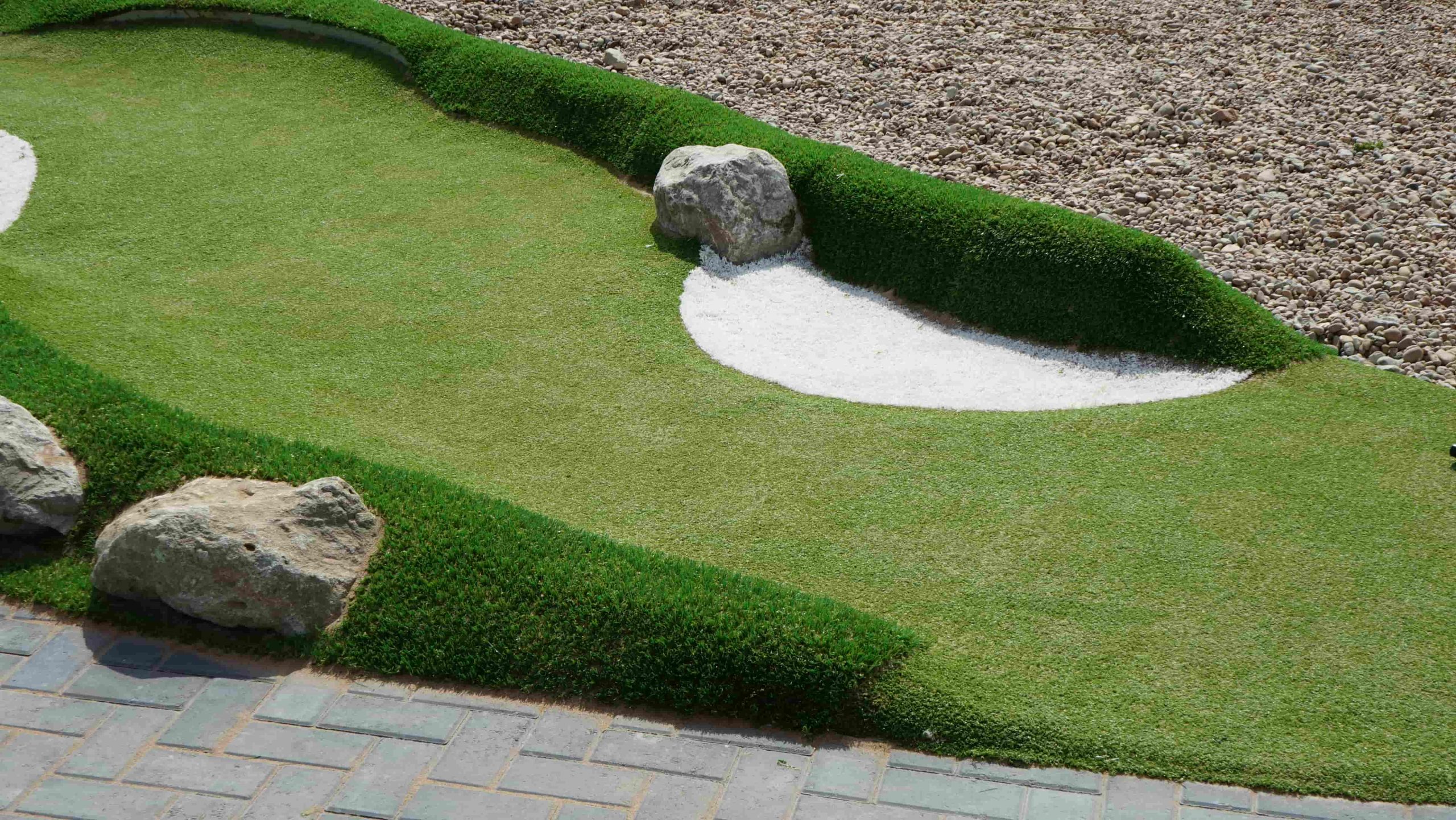
🛠️ Expert Insight: Golfers often begin by asking which grass they should buy. In practice, the best results come from treating the turf and base as one playing system. Premium putting turf cannot compensate for an unstable or inaccurately shaped surface underneath.
Should a Garden Putting Green Be Flat?
Not necessarily.
A completely flat green is useful for working on starting line and putting stroke. Gentle contours can make practice more varied by introducing left-to-right, right-to-left, uphill and downhill putts.
The difference is whether those changes are intentional.
Good contours should be:
- Planned around the available space
- Smooth rather than sudden
- Stable beneath the turf
- Playable from several starting positions
- Challenging without making every putt unrealistic
Random lumps, poor compaction and uneven joins are not useful breaks. They make the surface inconsistent and reduce the value of practising on it.
For a small garden, one or two subtle breaks may provide more useful variation than trying to fit dramatic slopes into a limited area.
How Should You Design a Garden Putting Green?
Start with the type of practice you want rather than trying to copy the appearance of a full golf course.
Consider:
- How many cups you want
- The longest putt you would like to practise
- Whether you want straight and breaking putts
- How players will move around the green
- Whether the area is for serious practice or family fun
- How the putting surface will meet the surrounding garden
Putting Cups
More cups create additional lines and practice options, but each hole needs to sit sensibly within the overall layout.
Placing several cups too close together can make a small green feel cluttered without creating meaningful variety.
Fringes and Rough
A longer artificial grass fringe can make the putting green look more natural and define its edges.
It can also create opportunities for short chip-and-run practice where the layout and surroundings make that appropriate.
The transition between the short putting turf and longer grass needs careful cutting and secure edges. A badly finished transition can catch balls or become visually untidy.
Shape
Curves often help a putting green feel integrated into the garden, but every curve adds cutting and edge work.
Simple shapes may provide more playable surface within a restricted space. The best design balances appearance with the amount of usable practice area.
Colour and Features
Contrasting grass, bunker-style areas and coloured features can create a more playful mini golf appearance.
For a private practice green, many homeowners prefer a restrained design that blends with the surrounding lawn and planting.
How Should an Outdoor Putting Green Drain?
An outdoor putting green needs to release rainfall without allowing the surface to become unstable or waterlogged.
The turf may have a permeable backing, but that only allows water to pass through the visible surface. It still needs somewhere to go underneath.
Drainage planning should consider:
- The permeability of the putting turf
- The construction of the base
- The existing soil
- Which direction the garden falls
- Nearby paving and walls
- Where water can safely disperse
The surface should not be shaped in a way that unintentionally sends water into a low section or around a cup.
Artificial grass does not correct an existing drainage problem by itself. Our guide to what to put under artificial grass for drainage explains why the complete installation matters.
How Much Space Do You Need for a Garden Putting Green?
There is no compulsory minimum size.
A compact straight lane can provide useful repetition practice, while a larger shaped green allows more angles, breaks and cup positions.
Before deciding on the size, ask:
- What is the longest putt the space allows?
- Can you practise from several starting points?
- Is there enough room to stand and swing the putter comfortably?
- Will people need to walk across the green to reach another area?
- Does the garden still need space for seating, pets or children?
A smaller, accurately built practice green is usually more valuable than a larger area with poor turf or rushed groundwork.
A putting green can also form one section of a wider artificial lawn. This works well where the garden needs to remain suitable for general use.
For homeowners planning artificial grass in Manchester, a compact putting lane can be incorporated into an urban garden without turning the whole space into a mini golf course.
Larger gardens around Bury and the surrounding areas may provide more room for curved greens, multiple cups and a separate fringe.
Can You Build a DIY Artificial Putting Green?
A simple flat putting mat or straight practice lane may be achievable as a DIY project if the existing surface is stable and level.
A permanent outdoor green is more demanding.
Common DIY problems include:
- Choosing landscape grass instead of putting turf
- An uneven or insufficiently compacted base
- Visible joins
- Wrinkles or movement in the surface
- Poorly formed contours
- Untidy cuts around cups
- Drainage problems
- Edges lifting over time
Putting turf exposes small fitting errors because the ball travels directly across them.
If the aim is a permanent green for meaningful practice, professional preparation and fitting will normally produce a more consistent result.
Our main artificial grass installation service explains the groundwork and fitting principles used across our domestic projects.
Real Project: 400m² Golf Pro Installation in Folkestone
As Good As Grass helped transform an overgrown site in Folkestone into a family-friendly mini golf course.
The client prepared the underlying base before our team completed the surface installation.
We installed approximately 400m² of 10mm Golf Pro putting turf across a layout containing:
- Curved concrete borders
- Tight transitions
- Slopes and contours
- Obstacles and feature areas
- Contrasting grass borders
Every section needed to be shaped, tensioned and trimmed accurately. A small cutting error around a curve could affect both the appearance and the way the hole played.
No shock pad was required because the project had a firm prepared base and was a low-impact environment. This was a project-specific decision rather than a rule for every golf surface.
The surface work was completed within approximately one to two weeks, leaving a clean and playable course with controlled ball roll.
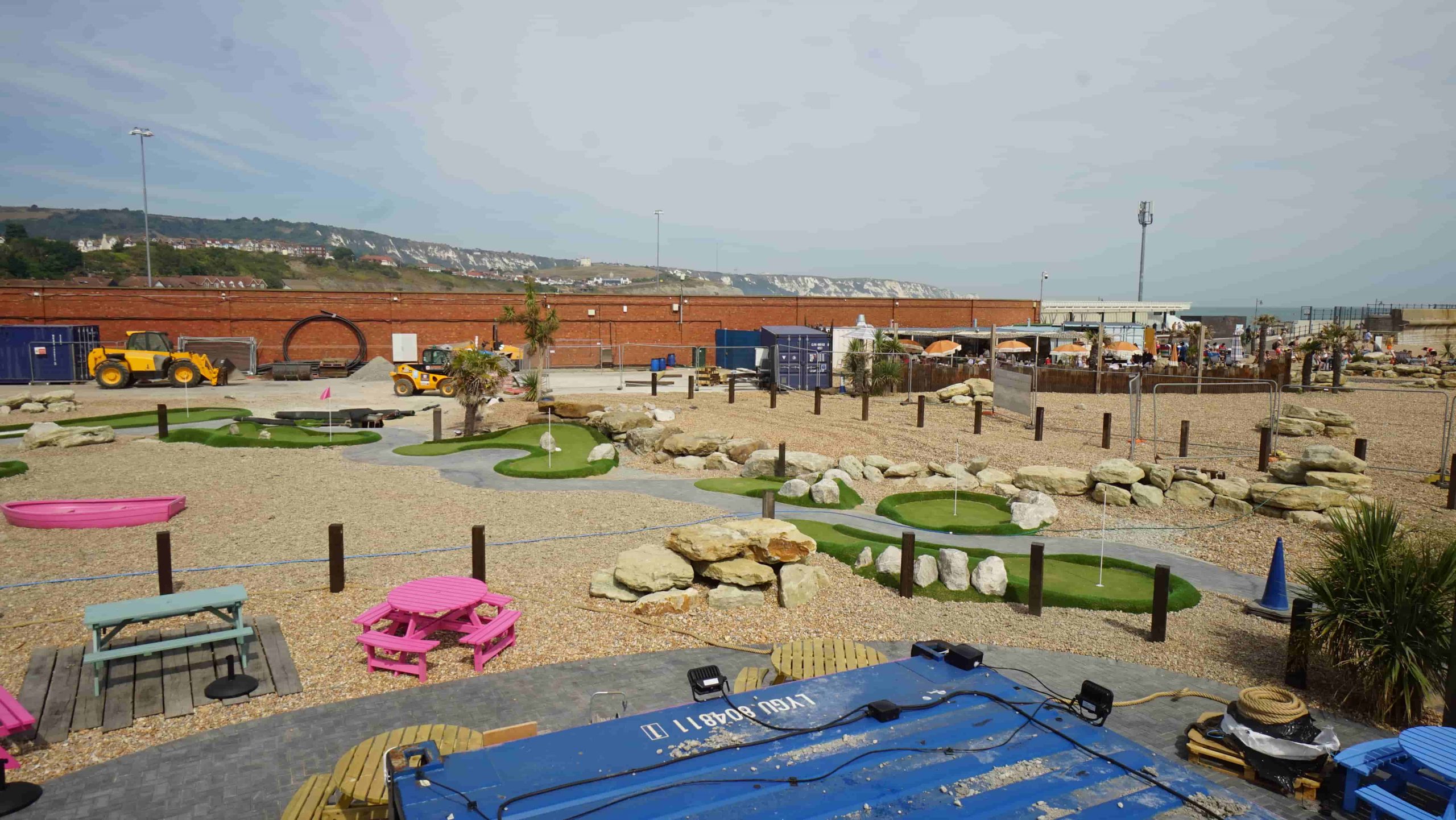
You can see the full transformation in our Folkestone mini golf installation case study.
How Is a Garden Putting Green Different From Crazy Golf?
A private putting green and a commercial crazy golf course may use similar installation skills, but the priorities are different.
| Factor | Garden Putting Green | Commercial Crazy Golf |
|---|---|---|
| Main purpose | Golf practice and private recreation | Entertainment and visitor experience |
| Design | Usually restrained and garden-led | May include themes, obstacles and bold colours |
| Ball behaviour | Focused on realistic practice | Balanced with fun and accessibility |
| Foot traffic | Normally low to moderate | Potentially heavy and continuous |
| Turf priority | Putting performance and garden appearance | Durability, playability and visual impact |
If you are planning a leisure venue, school course or visitor attraction, our mini golf and crazy golf installation service covers the commercial options.
What Affects the Cost of a Garden Putting Green?
Garden putting greens are normally priced individually because the turf is only one part of the project.
The quote may be affected by:
- Total putting area
- Existing ground conditions
- Excavation and waste removal
- Access to the garden
- Base construction
- Drainage requirements
- Number of cups
- Contours and shaping
- Curved edges
- Fringe or longer surrounding turf
- Joins and transitions
- Whether the installation is over soil or an existing hard surface
A small green is not always cheap per square metre. Detailed shaping, several cups and restricted access can still create a labour-intensive installation.
Our mini golf turf installation cost guide explains how surface area, design complexity and preparation affect specialist golf projects.
For a domestic garden, a survey is the best way to establish what preparation is required and produce an accurate quote.
How Do You Maintain an Artificial Putting Green?
Artificial putting greens require less maintenance than natural golf greens, but they are not completely maintenance-free.
Regular care may include:
- Removing leaves and loose debris
- Brushing the surface as recommended
- Clearing material from around the cups
- Checking edges and joins
- Removing weeds around the perimeter
- Rinsing dirt or spillages
- Monitoring drainage after heavy rain
- Managing the infill where the chosen system uses it
Leaves, twigs and grit can alter ball roll even when they do not damage the turf.
Avoid using a metal rake or harsh chemicals. The correct maintenance method depends on the particular golf turf and installation system.
For more substantial cleaning or repair work, explore our artificial grass maintenance and repair service.
How Do You Choose the Right Garden Putting Green?
Begin with the playing experience you want.
Ask yourself:
- Is the green mainly for serious practice or family fun?
- What length of putt do you want to practise?
- Do you want a flat green or several controlled breaks?
- How fast should the surface feel?
- Will the putting area form part of a larger artificial lawn?
- Do you want a longer fringe around it?
- How much maintenance are you prepared to carry out?
Then assess the garden itself:
- Available size and shape
- Ground conditions
- Access
- Existing levels
- Drainage
- Nearby trees and falling debris
- How the space connects with paths and seating
Once those points are clear, the turf can be matched to the project rather than selected from appearance alone.
FAQs About Artificial Garden Putting Greens
If you are considering a permanent practice green at home, these are the main points to understand.
What is the best artificial grass for a garden putting green?
The best option is usually a specialist short-pile, dense golf turf designed for smooth and consistent ball roll. Standard landscape grass is normally too long and soft for realistic putting practice.
What pile height is best for a garden putting green?
Short-pile turf is generally best. As Good As Grass used 10mm Golf Pro turf for its Folkestone mini golf installation, although the correct specification for a garden depends on the product, base and desired playing speed.
Can you use normal artificial grass for a putting green?
You can putt across normal landscape grass, but it will rarely provide the same consistency as specialist golf turf. Longer fibres and decorative thatch can slow the ball or affect its direction.
Does the base affect how a putting green plays?
Yes. The base affects firmness, levels, contours and ball direction. Short putting turf closely follows the surface underneath, so inaccurate or unstable groundwork can create unwanted breaks and inconsistent play.
Should an artificial putting green be completely flat?
Not necessarily. A flat area is useful for practising starting line, while gentle contours create breaking putts. Any slopes should be deliberately shaped rather than caused by poor levelling or compaction.
Can a putting green be installed as part of a larger artificial lawn?
Yes. A short putting surface can be incorporated into a wider garden lawn. Longer landscape grass may be used around it to form a fringe and help the practice area blend into the garden.
Can an artificial putting green be installed over concrete?
Yes, provided the existing surface is stable, suitable and prepared using the correct installation system. Drainage, levels, joints and any required underlay should be assessed before fitting begins.
How many holes should a garden putting green have?
There is no set number. The right choice depends on the size and shape of the garden. Several well-positioned cups can create different practice lines, but too many may reduce the amount of useful putting space.
Do artificial putting greens need sand infill?
Some putting-turf systems use a specified amount of silica sand or another infill to stabilise the surface and influence ball roll. Others may use a different construction. Follow the turf manufacturer’s and installer’s specification rather than adding sand automatically.
How long does an artificial putting green last?
Lifespan depends on turf quality, installation, usage, drainage and maintenance. A professionally installed domestic green should provide many years of use when it is kept clean and maintained appropriately.
Ready to Build Your Own Garden Putting Green?
Send us a few photos, rough measurements and an idea of how you want to use the space. We’ll help you plan the turf, base, layout and contours needed for a garden putting green that performs properly.
Choose a Putting Surface That Plays Properly
The best artificial grass for a garden putting green is not simply the greenest or softest product.
It is a short, dense golf turf matched to a stable base, carefully planned contours and the way you want to practise.
Standard garden grass may create the right colour, but specialist putting turf creates the playing performance. The cuts, joins, cups and surface preparation then determine whether the finished green feels smooth and predictable.
At As Good As Grass, we have installed specialist artificial golf surfaces for private clients and commercial attractions, including the 400m² Folkestone mini golf course and Noah’s Park Adventure Golf.
Explore our mini golf and putting turf installation service or contact our team to discuss your garden.