

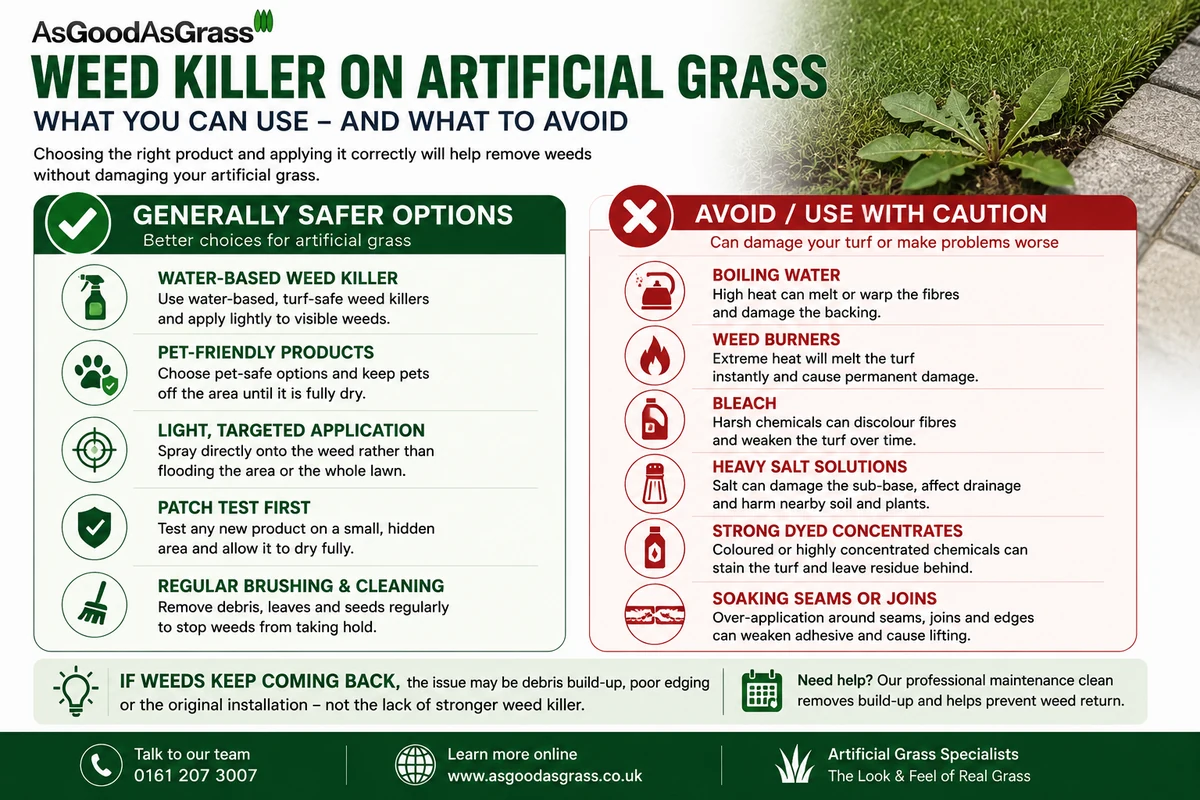
Yes – you can use weed killer on artificial grass, but only if you choose a product that is suitable for synthetic turf and apply it carefully. The safest options are usually water-based or pet-friendly weed killers used in light, targeted amounts. Harsh chemicals, coloured concentrates, boiling water, weed burners, and anything likely to affect the backing or seams should be avoided.
Most weeds on artificial grass do not grow out of the plastic fibres themselves. They usually appear from airborne seeds, organic build-up, weak edges, or gaps around the perimeter. That means the best long-term fix is not just killing the visible weeds, but improving cleaning, edge control, and ongoing maintenance too.
If you’re just starting out with upkeep, our full Artificial Grass Maintenance Guide walks you through everything from daily brushing to long-term care – and this blog focuses specifically on weed control.
Quick Answer:
You can use weed killer on artificial grass, but it needs to be suitable for synthetic turf and applied with care. For most homes, a water-based or pet-friendly weed killer is the safest option. Avoid anything too harsh, oily, dyed, heat-based, or likely to affect seams, backing, or nearby planting.
Jump to:
- Is Weed Killer Safe for Artificial Grass?
- What Types of Weed Killer Can You Use?
- What Is the Best Weed Killer for Artificial Grass?
- Can You Use Roundup, Weedol or Resolva on Artificial Grass?
- Can Weeds Grow Through Artificial Grass?
- Why Do Weeds Keep Coming Back?
- How to Apply Weed Killer Safely
- What to Avoid at All Costs
- How to Prevent Weeds in Artificial Grass
- FAQs
Is Weed Killer Safe for Artificial Grass?
Yes, weed killer can be safe for artificial grass – but not every product is suitable. The main risk is not the idea of weed killer itself, but using the wrong formula, applying too much, or soaking areas like seams, joins, edges, or the backing.
In most cases, a water-based weed killer for artificial grass is the safest place to start, especially if children or pets use the lawn. A targeted spray used lightly on visible weeds is usually far safer than aggressive DIY methods like bleach, boiling water, or flame-based weed burners.
If you are unsure, test a small hidden patch first and allow it to dry fully before treating the whole area.
AGAG Pro Tip: Always patch test any new product first. If it discolours the turf, affects the pile, or leaves residue behind, do not use it across the rest of the lawn.
What Types of Weed Killer Can You Use?
If you are wondering what weed killer you can use on artificial grass, the safest approach is to choose a product that is clearly suitable for synthetic turf, water-based where possible, and not overly aggressive around seams or edges. Some treatments can help with light weed growth. Others create more problems than they solve.
Here’s a quick-reference guide to what’s generally safer to use and what should be avoided:
| Product Type | Safe for Turf? | Notes |
|---|---|---|
| Acetic acid (vinegar) | ✅ Yes | Natural weed killer that dries out leaves and stems |
| Water-based herbicides | ✅ Yes | Choose turf-safe and pet-friendly options |
| Glyphosate-based weed killers | ⚠️ Check carefully | Only use if the label confirms it is suitable around synthetic turf. Avoid soaking seams, backing, edges or nearby planting. |
| Salt-based solutions | ⚠️ Use with care | Can damage sub-base or seep into nearby areas |
| Boiling water | ⚠️ Avoid | Risk of melting or warping turf – not worth it |
What Is the Best Weed Killer for Artificial Grass?
The best weed killer for artificial grass is usually one that is water-based, suitable for synthetic turf, and safe to use around pets once dry. In practice, the right choice depends on how bad the weed growth is and where it is appearing.
- For light, isolated weeds: a gentle, targeted treatment can be enough
- For family gardens: pet-friendly options are usually the safest choice
- For repeat weed problems around edges or joins: the issue is often the installation detail or build-up of debris, not just the weed killer itself
- For homeowners trying DIY solutions: diluted vinegar may help on small weeds, but results are usually less reliable than a purpose-made product
What matters most is not chasing the “strongest” weed killer. It is choosing one that works without risking damage to the lawn, surrounding borders, drainage, or the usability of the area.
Can You Use Roundup, Weedol or Resolva on Artificial Grass?
Some branded weed killers may be suitable for use near artificial grass, but you should never assume they are safe for synthetic turf without checking the label first.
Products such as Roundup, Weedol or Resolva are designed for killing weeds, not caring for artificial grass. The main risks are staining, residue, over-application, damage around seams, or chemical run-off into nearby planting and drainage areas.
If you do use a branded weed killer, apply it lightly and directly to the weed, avoid soaking the backing or joins, and patch test a hidden area first. For most domestic lawns, a water-based, pet-safe weed killer is the better starting point.
Can Weeds Grow Through Artificial Grass?
They can, but not in the way most people imagine. Weeds do not grow out of the plastic fibres. More often, they appear through small gaps, around edges, between adjoining surfaces, or from seeds that settle into dust and organic debris sitting on top of the lawn.
If weeds keep coming back, it is usually a sign that one of the following is happening:
- Airborne seeds are settling into debris on the surface
- The lawn edges are not fully sealed or finished neatly
- There is soil build-up around borders, paving, or planters
- The original installation did not include proper weed suppression below
This is why removing visible weeds is only part of the job. Ongoing brushing, cleaning, and good edge detailing are what help prevent weeds in artificial grass long term.
Why Do Weeds Keep Coming Back in Artificial Grass?
If weeds keep returning after treatment, the weed killer is probably only solving the surface problem.
Recurring weeds usually come from one of three places: seeds settling into debris on top of the lawn, gaps around the edges, or issues with the original base and weed membrane. This is why good artificial grass maintenance is about more than spraying the visible weeds.
At As Good As Grass, we often see repeat weed problems where lawns have been left without brushing, where soil has built up around borders, or where the original installation did not deal with the sub-base properly. A quick spray may tidy things up for a while, but cleaning, edge control and proper maintenance are what keep the lawn looking right long term.
How to Apply Weed Killer Safely
Once you’ve chosen a suitable product, careful application matters just as much as the product itself. The goal is to treat the weed without soaking the whole lawn.
- Choose a dry day with no rain expected for at least 24 hours
- Brush away leaves, dust, moss, and loose debris first
- Apply the weed killer directly to the weed rather than flooding the area
- Avoid heavy saturation around seams, joins, and perimeter edges
- Allow the area to dry fully before pets or children go back on the lawn
Note: Large or persistent patches may need a second treatment later, but repeated weed growth usually points to a maintenance or edge-detail issue that also needs addressing.
What to Avoid at All Costs
Even if weeds are driving you mad, steer clear of these turf-wrecking tactics:
- Bleach – corrodes fibres and discolours turf
- High-pressure jet washers – can lift seams and damage backing
- Weed burners – will melt turf instantly
- Salt overload – ruins drainage and kills nearby soil health
How to Prevent Weeds in Artificial Grass
If you want to stop weeds returning, prevention matters more than repeatedly spraying the same spots. Most artificial lawns stay looking tidy when the surface is kept clean and the edges are looked after properly.
- Brush the grass regularly to lift the pile and remove airborne seeds before they settle
- Clear leaves, petals, and grass clippings quickly so they do not break down into a growing layer
- Rinse the surface occasionally to remove dirt, residue, and organic build-up
- Check the edges and joins where weeds are most likely to appear
- Deal with small weeds early before roots establish around the perimeter
- Book an annual professional clean if the lawn is heavily used, shaded, pet-exposed, or showing repeat growth
FAQs
Still got questions about killing weeds on artificial grass? Here are the most common ones we hear:
Can you use weed killer on artificial grass?
Yes, as long as the product is suitable for synthetic turf and used carefully. Water-based and pet-friendly formulas are usually the safest starting point.
What is the best weed killer for artificial grass?
The best option is usually a water-based weed killer that is safe for synthetic turf and suitable for family gardens once dry. Avoid overly harsh or unlabelled concentrates.
Can I use Roundup on artificial grass?
It is better to avoid harsh weed killers unless the product guidance clearly confirms it is suitable for synthetic turf. When in doubt, choose a gentler turf-safe option and patch test first.
Does weed killer damage artificial grass?
The wrong product can. Strong chemicals, heavily dyed treatments, heat-based methods, and over-application can all risk affecting the pile, seams, or backing.
Can weeds grow through artificial grass?
They can appear through small gaps, edges, or built-up debris, but they do not grow out of the plastic fibres themselves. Regular cleaning and edge maintenance help prevent this.
Is pet-friendly weed killer safe for artificial grass?
Many pet-friendly products are safer choices, but you should still check the label, patch test first, and wait until the treated area is fully dry before letting pets back on.
Will vinegar kill weeds in artificial grass?
Diluted vinegar may help on small patches, but results can be inconsistent. It is usually better for light surface weeds than stubborn or recurring growth.
How often should I treat weeds on artificial grass?
Most lawns only need occasional spot treatment. If weeds keep returning, the bigger issue is usually debris build-up, poor edging, or a maintenance problem rather than the lack of more weed killer.
Weeds keep coming back?
If your artificial lawn keeps growing weeds around the edges, joins or surface, it may need a proper clean rather than another bottle of weed killer.

